
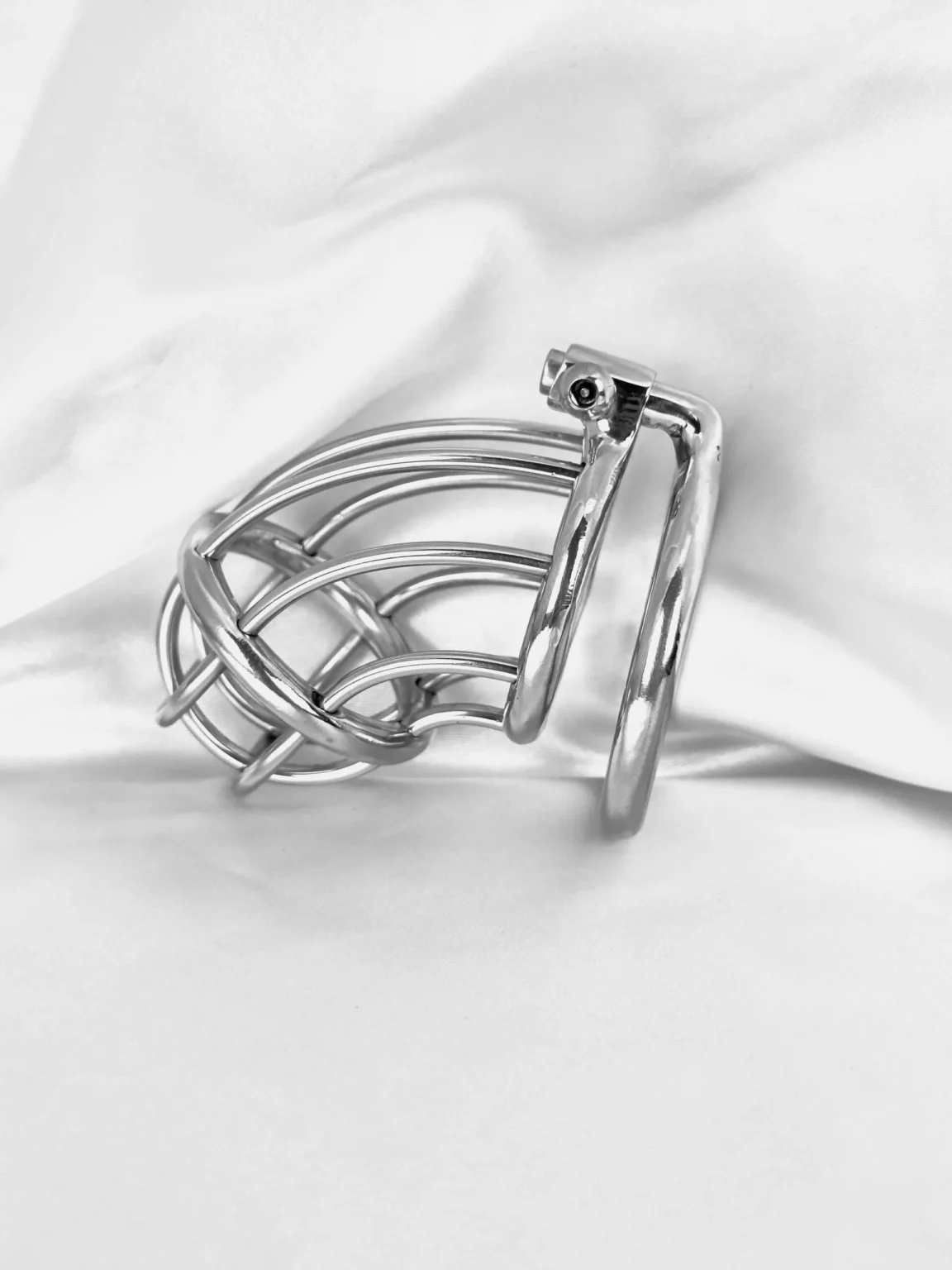
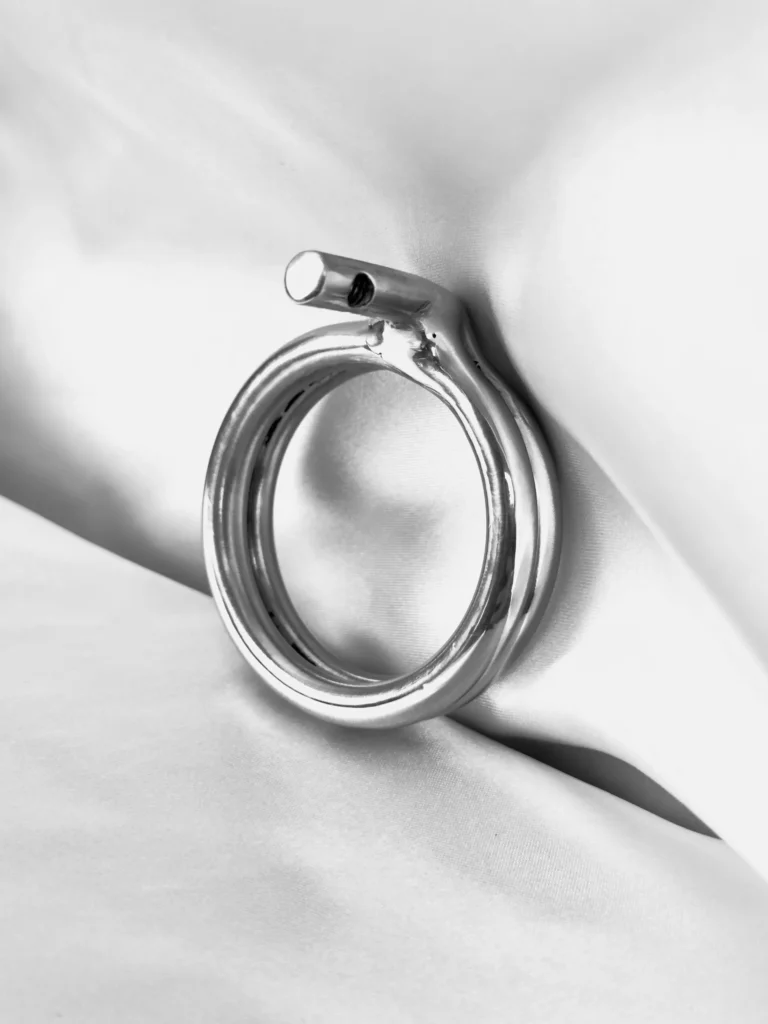
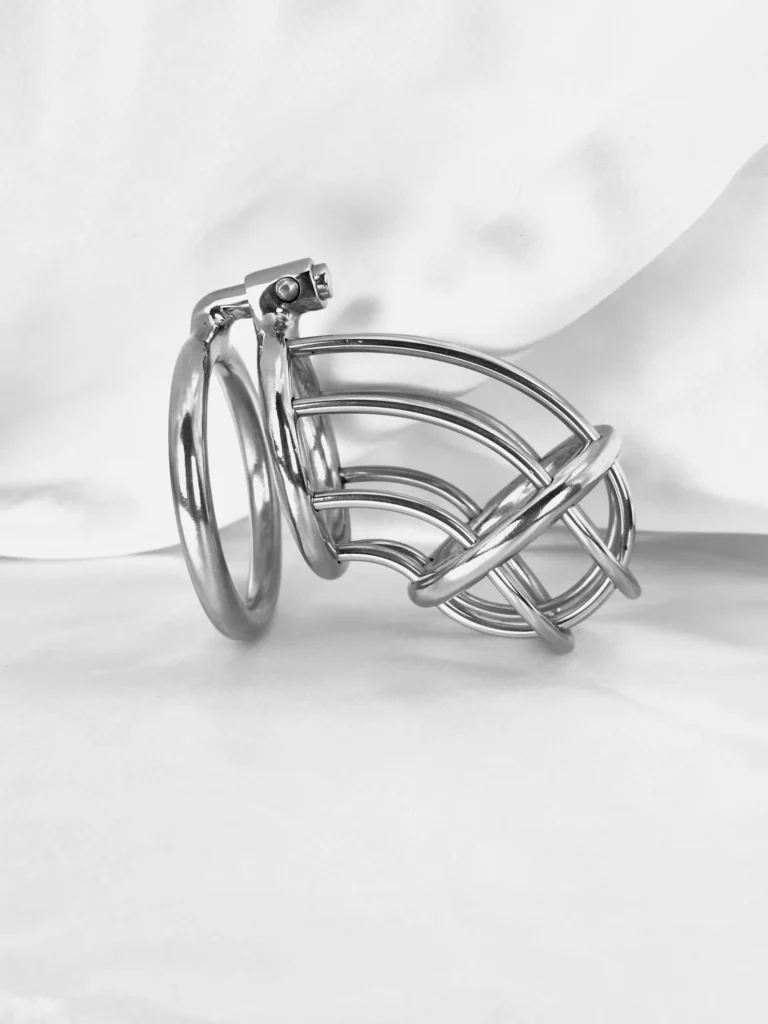
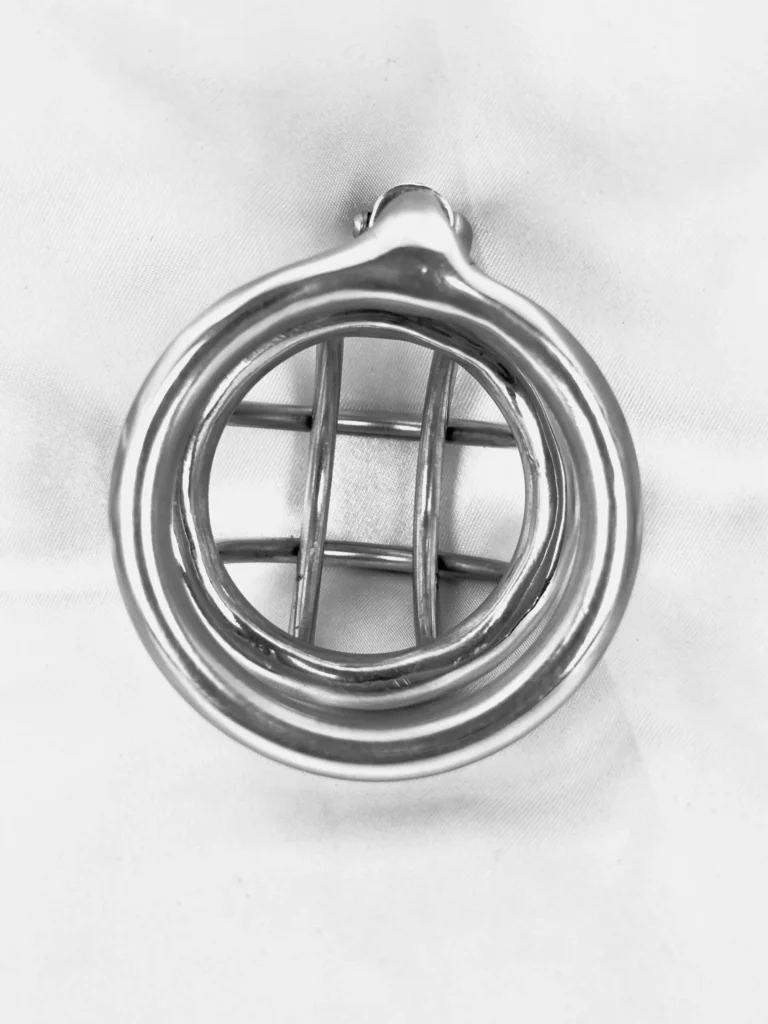
You can fly in a chastity cage, but a stainless steel one will set off the metal detector, and a body scanner will flag the area. Expect additional screening. That’s the honest answer, and it’s the same one on our FAQ page. Wearers handle it one of two ways: Go through extra screening process or pack the device in checked luggage and lock up again on arrival. Which one you choose depends on your comfort with a private pat-down and on who holds the key.
A walk-through metal detector responds to metal on or in your body. Several ounces of stainless steel at the groin will trigger it every time. There’s no trick to it, no way to “hold still” through it, and no reason to try. A steel cage is not concealable from a metal detector.
The other machine, the full-body scanner most larger airports use, shows the officer an outline with an alert marker over any area it can’t resolve. A cage will produce a marker at the groin. Again: expected, not suspicious in itself. Lots of ordinary things trigger the same marker.
Either way, what follows is a secondary screening: usually a hand-held wand and a pat-down of the flagged area. Procedures vary by country and by airport, and they change, so treat this as the shape of what happens rather than a rulebook. Check the current guidance from the security authority where you’re flying if you want specifics.
In most jurisdictions you can ask for the pat-down to happen in a private room, with an officer of the same sex, and you can ask for a witness. Screeners see medical devices, piercings, prosthetics, and hardware of every description all day; a locked device is unusual but not alarming to them. Say what it is plainly and briefly, in the same register you’d use for a hip implant. Embarrassment tends to make these encounters longer, not shorter.
Some wearers carry a short printed card explaining that they’re wearing a locked stainless steel device that cannot be removed without a key, so they don’t have to explain out loud. That’s the first of the two options our FAQ points to.
Option 1: wear it through, with a printed explanation. Best when the Keyholder isn’t traveling with you and the point is that it stays on. Bring the card, budget an extra fifteen or twenty minutes at security, ask for private screening if you’d rather, and answer questions calmly. This is what long-distance and 24/7 wearers generally do. Note that some countries’ screening is more thorough or less private than others; if you’re flying somewhere unfamiliar, the second option is the lower-friction one.
Option 2: remove it and pack it in checked luggage. Best when the trip is the destination and the cage is not. A steel device in a checked bag is just a metal object; there’s nothing to explain. One of our reviewers does exactly this for flights and for buildings with metal detectors, and locks up again on arrival. The Keyholder can hold the key for the trip either way; the device travels, the control doesn’t lapse. After security, a trip to the restroom to put the device back on and a quick photo to the Keyholder for verification that you are back to your travels.
A few things we’d tell anyone flying locked:
People ask whether a plastic or resin cage would just sail through. Sometimes it does; some plastic devices with metal-free locks don’t trigger the metal detector, though a body scanner may still flag the area. We say so plainly in our metal vs plastic comparison and our metal vs silicone piece: airport discretion is a real advantage of non-metal devices.
For everyone else, the checked-luggage option gets a steel cage from home to hotel with zero drama.
If the cage you’re traveling in isn’t quite right, a long flight will tell you. Email us with the fit question before the trip; adjustments to ring, gap, and length are part of what we do. And if you’re still deciding on your first device, browse the range and start with the plastic sizing rings; those, at least, won’t set anything off.
Allow optional analytics to help us understand visits and purchases? Your choice does not affect shopping. Advertising tracking stays off.