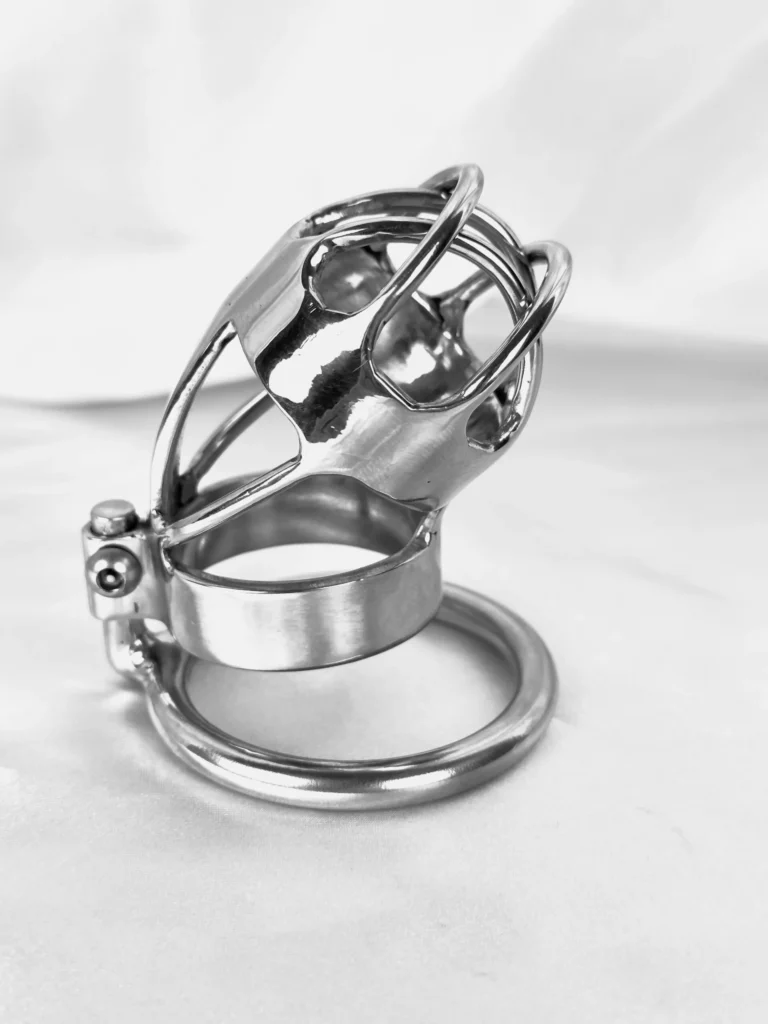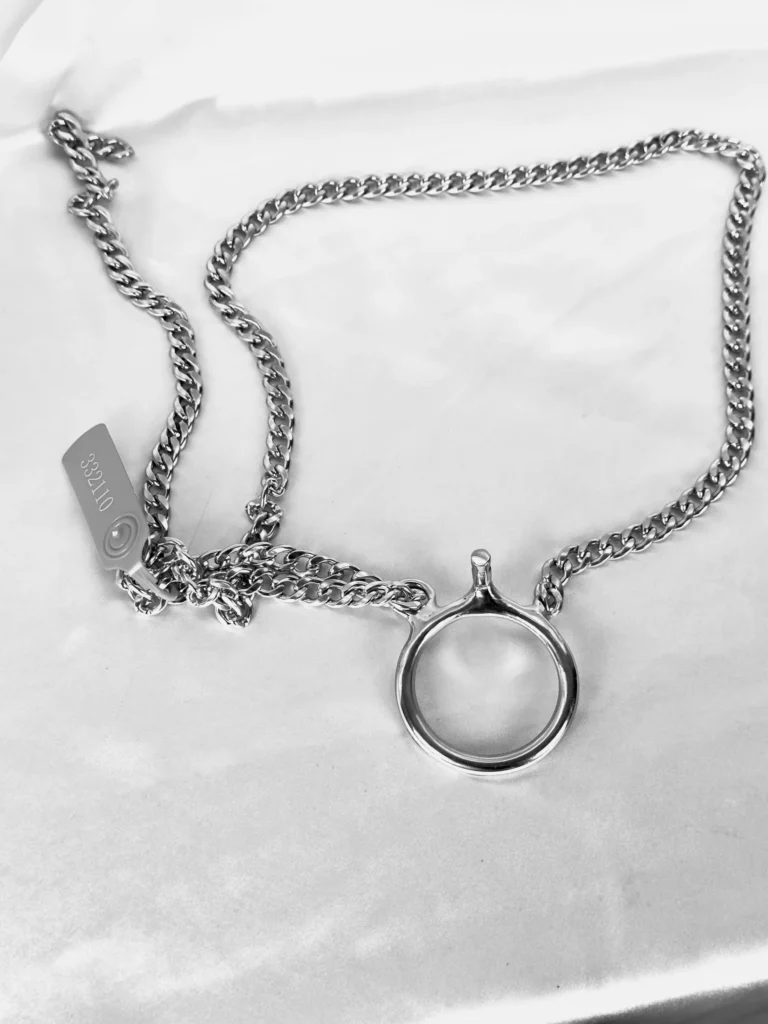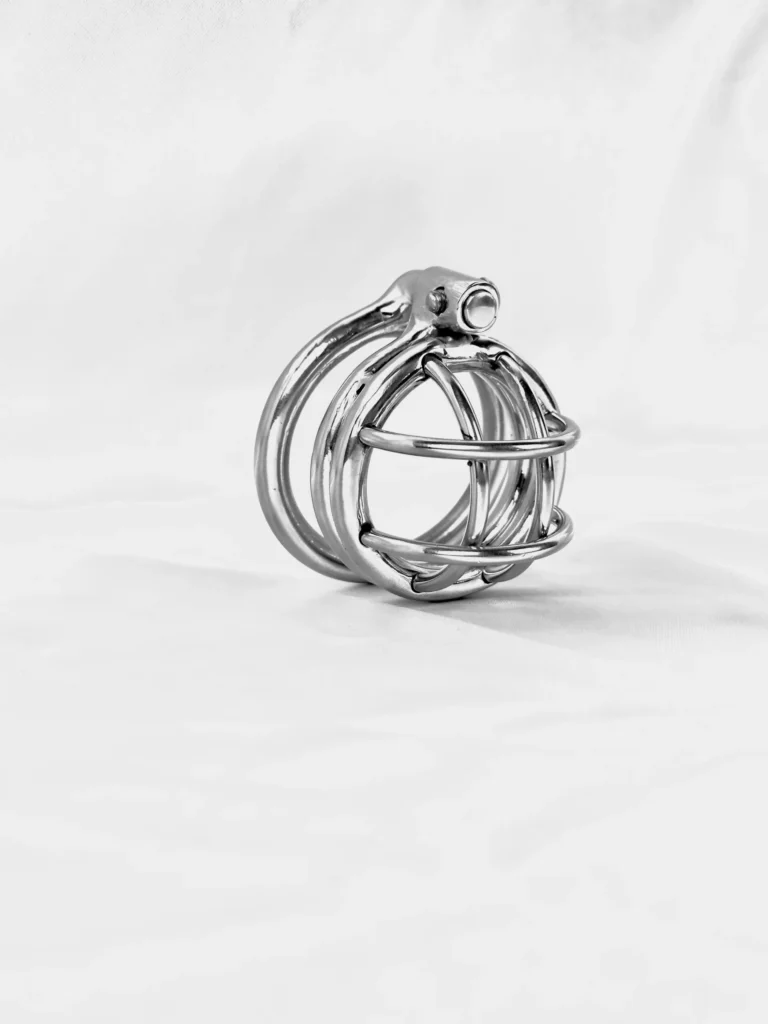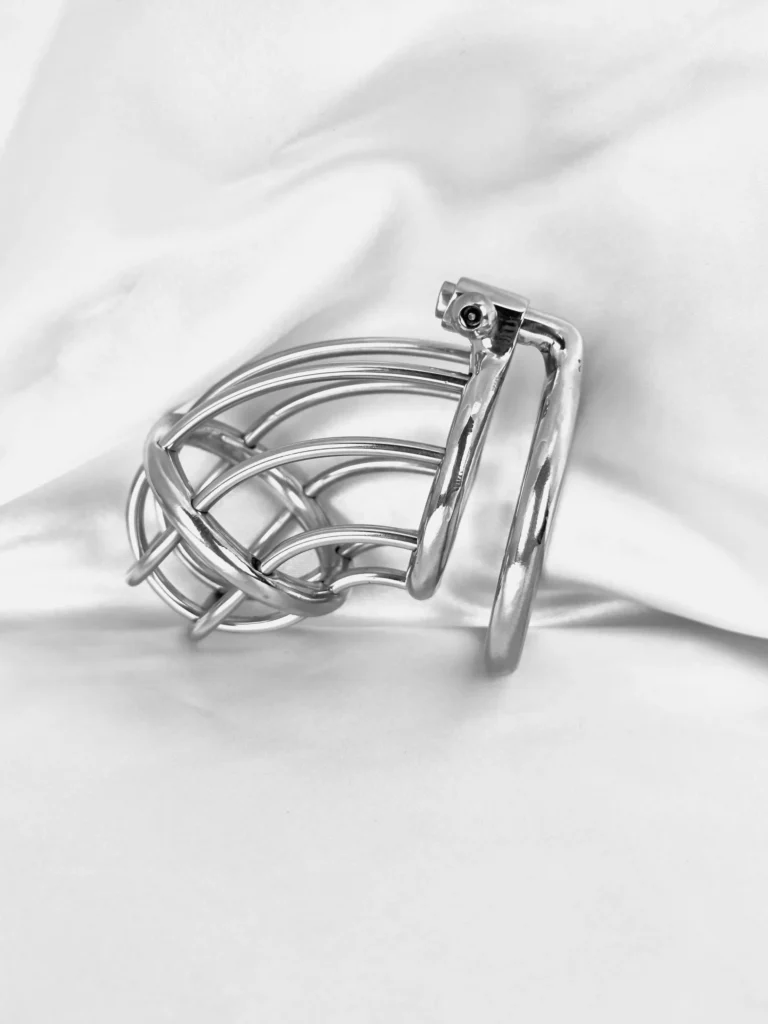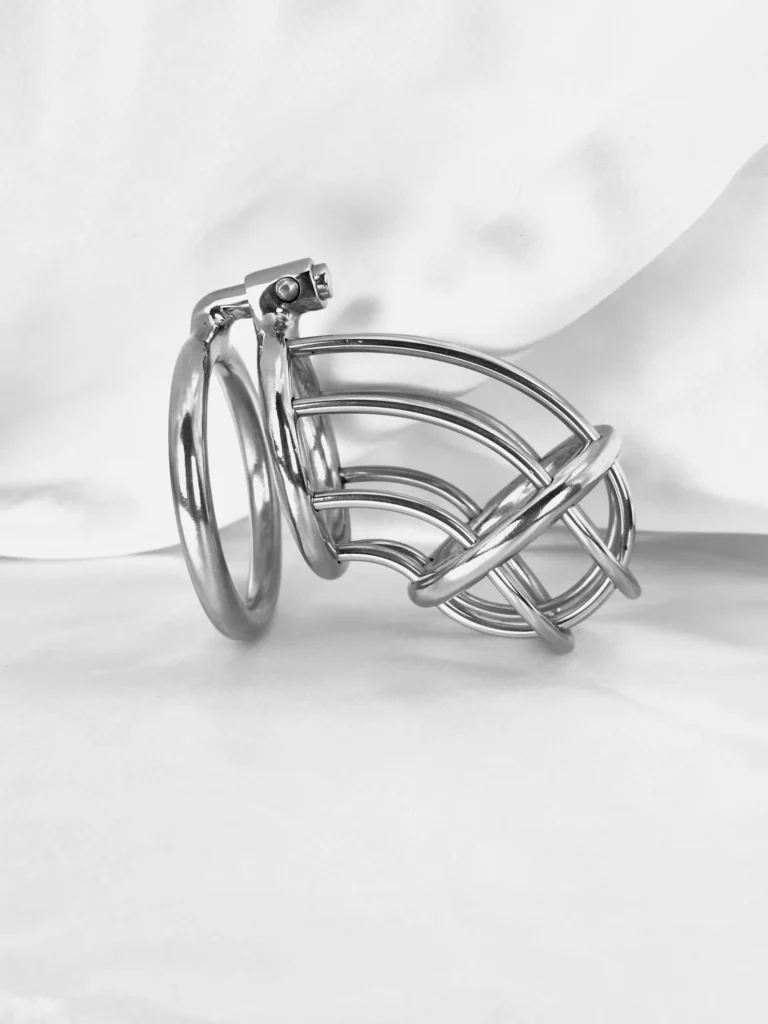

Most of the upgrade stories in our reviews start the same way: with a plastic chastity cage, usually a well-loved one, usually cracked. Not because plastic is a scam. Plastic is where a large share of this community started, and it earned that role honestly: cheap, light, unintimidating, in your hands right after ordering.
But plastic is where people start, and steel is where the long-haulers end up. If you own a plastic cage right now, consider this the straight version of the upgrade conversation: what plastic genuinely does well, where it fails and why, and how to move to metal without repeating your original sizing guesses.
Give plastic its due. It costs little enough to be an experiment rather than a commitment. It weighs almost nothing. It doesn’t look like hardware, which matters to a nervous buyer, and it doesn’t behave like hardware at an airport, which matters to a traveling one. It ships from a warehouse today instead of being built in a workshop for weeks.
The category also carries real history. The CB-6000 and its family introduced thousands of men to chastity from the early 2000s on, complete with numbered rings and spacer kits, and a huge share of the wearers reading this page learned their first lessons inside one. Respect where it’s due; we’ll review that device properly on its own later in this series. Kink3D as well as other custom plastic cage manufacturers have come a long way in popularity. But they still have limitations.
So no, we won’t tell you plastic was a mistake. We’ll tell you it has a service life.
Cracking
That isn’t a scandal; it’s materials science doing what it does. Rigid polymers fatigue under repeated load, and a cage lives under repeated load all day. Stress concentrates exactly where the design is busiest: pin holes, seams, the joints where ring meets cage. Add body heat, add years, and a hairline appears, then grows, and a crack edge is suddenly resting against some of your least negotiable skin.
Cleanliness
Closed construction adds a second problem. Most plastic designs are solid tubes — the solid shape is what makes the plastic robust — and a solid tube is a warm, damp room with the more frequent cleaning discipline plastic owners know all about. Between the fatigue clock and the moisture, a plastic cage asks more maintenance of its owner every year it survives. Bacteria will grow inside the cage unless it is removed for a proper cleaning.
If you’re wearing plastic right now, borrow a habit from aircraft mechanics and inspect before failure. Every few weeks, hold the cage up to bright light and look hard at the pin holes, the seams, and the joints where ring meets cage. Fatigue announces itself early, as fine white stress lines and hairline crazing, well before it becomes a crack you can feel against skin.
Comfort
Plastic tends to stick to skin. Then when the wearer attempts an erection, the skin can fold in the cage or in the ring. The added pressure from the blood flow will cause the skin to pinch. This is a bigger issue when the user is in public and/or at work.
|
Plastic |
Custom steel |
|
|---|---|---|
|
Up-front cost |
Low; an easy experiment. If the size is wrong then a new cage is required. |
Several times higher; built to order |
|
In your hands |
Days |
Our custom builds take 6–8 weeks. Rush order available for a fee in as little as 1 to 2 weeks. |
|
Weight |
Lighter |
About 5 oz (140 g) for an average Jail Bird |
|
Comfort |
Can pinch as the skin will stick to the plastic. |
Skin moves easily across smooth stainless |
|
Fit |
Fixed sizes |
Four sizes measured from your body; some measurements can be adjusted. |
|
During erections |
Rigid until it fatigues |
Rigid, permanently. Will last a lifetime. |
|
Hygiene |
Tube designs trap moisture and bacteria. |
Open bars wash and dry in place; sterilizable as needed |
|
Security |
Plastic pins that break. Much easier to defeat. |
Stainless steel with security screw is very difficult to defeat. |
|
Lifespan |
Fatigue is the clock |
Lifetime warranty against manufacturing defects |
Read the left column fairly and a pattern shows: plastic wins everything about the first month. Read the right column and steel wins everything about the next decade. That’s the whole comparison, honestly stated. Which column matters depends entirely on which stage you’re in, and nobody should feel foolish about either answer. The wearer six months into finding out and the wearer six years into knowing are different customers, and the same cage was never going to serve them both.
Polycarbonate has a deserved reputation; it’s the polymer in safety glasses and riot shields, tough far beyond its weight. The trouble in a cage isn’t the material’s headline strength, it’s the design reality: thin sections and pin joints carrying daily load, which is precisely the condition that fatigues rigid polymers. Toughness and fatigue life are different properties, and a cage tests the second one.
As for “medical grade” on a retail listing: it’s unregulated shorthand, and it can describe anything from genuine certified polymer to hopeful marketing. Our standing advice about any maker, ourselves included, is to check what’s actually specified. For the record, ours is specified: 316 and 304 stainless, the family used in implants and body jewelry, and that’s the last we’ll gloat about it on this page.
A steel maker telling you plastic is sometimes correct: enjoy it, because here it is, in writing.
Keep a plastic cage if you fly often. Walking through a metal detector without a conversation is worth owning one for, and no amount of steel loyalty changes airport physics. Keep one for the testing phase, when the real question is still whether locked life suits you at all and the budget should match the uncertainty. And here’s the use almost nobody mentions: keep wearing one while your steel builds. A custom device spends 6–8 weeks in the workshop, and the plastic cage you already own is a perfectly good bridge across that gap, provided it passes the bright-light inspection above.
Plastic’s problem was never existing. Its problem is being asked to be permanent.
Here’s where we can save you the most common upgrade mistake, because it arrives in our inbox weekly. The question is always some version of: can I order from my CB-6000 sizes?
The straight answer, from William, who has read these emails since 2009: every manufacturer measures differently, and most of the time it’s better to start fresh with the sizing kit. Even a plastic cage that feels comfortable can fit better than you know; the standard we build to is a cage you forget you’re wearing, and feel like you’re forgetting something when it’s off. Numbered plastic rings and spacer stacks simply weren’t measuring the same four things we build from.
So the path is the same one every first-timer takes, minus the nerves: wear our plastic sizing rings for at least a week, take your four sizes (cage inside diameter, base ring inside diameter, length, gap), and order from those. If you’d like to talk through your current cage’s fit first, write to maturemetalsales@gmail.com; we answer sizing questions personally, and yours won’t be the strangest one this week.
The full method is in the sizing guide, and if you’re rethinking design as well as material, the types guide and yesterday’s silicone comparison round out the picture.
When the crack finally shows up, or before it does, see the full range of made-to-measure steel designs. Sizing rings first, a week of wear, then the device that retires the fatigue clock for good.