
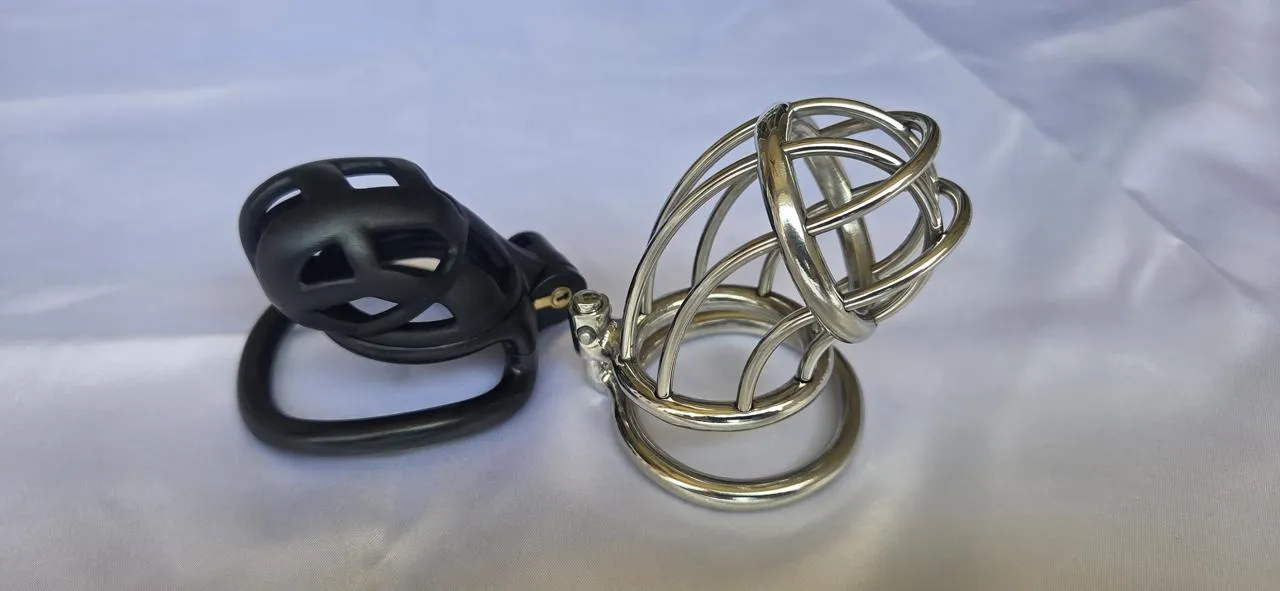
Here’s the comparison with the spin removed. Anyone weighing metal vs silicone chastity cages is really choosing between two philosophies: silicone is cheaper, softer, and friendlier to a nervous first week, while steel holds its exact shape for decades, cleans to a higher standard, and can be built to your body instead of near it.
We make steel for a living, so you know where we land. But we’d rather you buy the right cage than our cage, so the silicone column below gets its full due. It has earned some of it.
Price. A silicone cage costs a fraction of custom steel. If the whole experiment might end in a drawer, that matters, and pretending otherwise would insult you.
First-night feel. Soft edges forgive a beginner’s mistakes. The learning period, when you’re still finding out how your body reacts to a base ring, is gentler in a material that gives.
Weight and silence. Silicone is nearly weightless and completely quiet. No click against a zipper, nothing to sense through thin fabric.
Airport screening. A soft polymer cage doesn’t light up a metal detector the way steel does. If you fly caged and often, this is a genuine argument, and we’d rather say so plainly than pretend it away.
Zero-commitment testing. The silicone cock cage has become the standard first experiment for a reason: it answers “is this for me at all?” for the price of a dinner. If you go this route, buy from a maker that names its actual material; solid platinum-cured silicone and a vague soft blend are very different things against skin, so check what the manufacturer actually specifies.
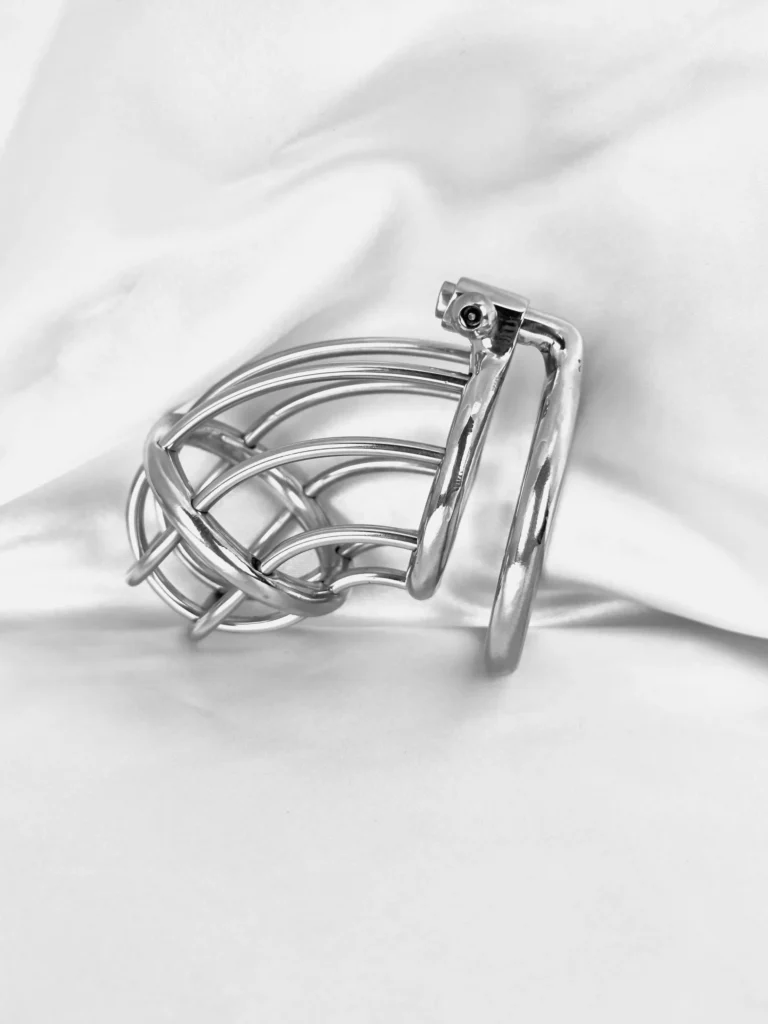
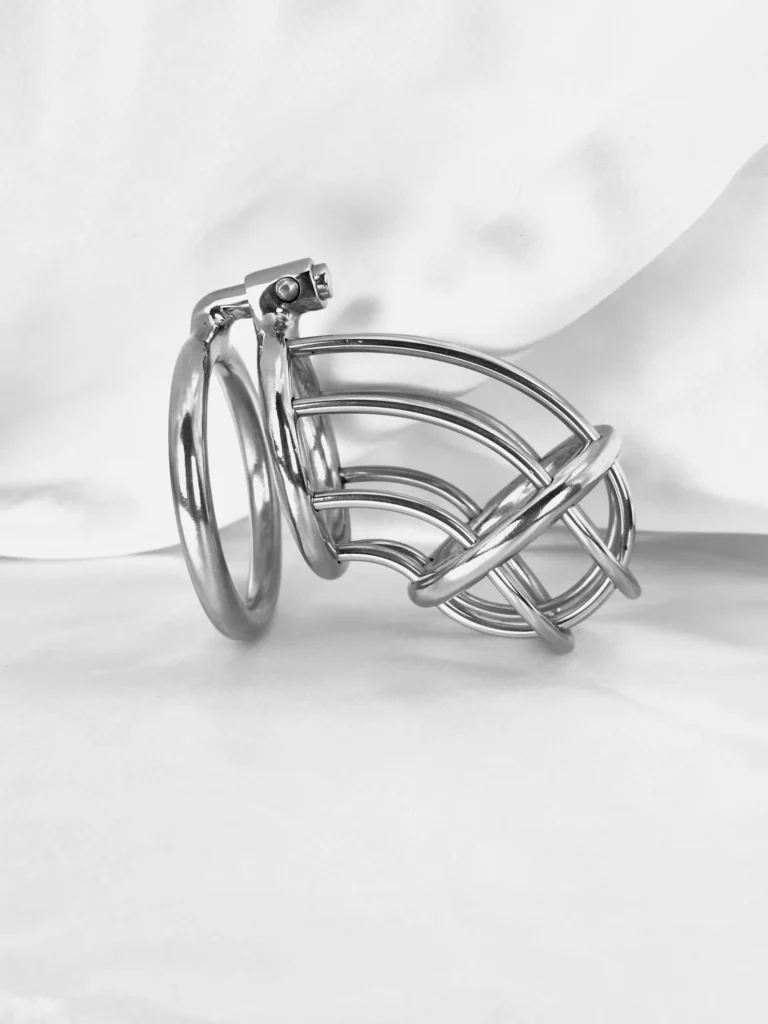
Rigidity, which is really fit. A steel cage that measures 1 1/2″ inside is 1 1/2″ inside at 2 p.m. and at 2 a.m., through erections, under waistbands, in sleep. A soft cage flexes with all of those, and a cage that changes shape is a cage that changes size. You didn’t buy a size; you bought a range of sizes, and you’ll meet the bad end of the range at night.
Hygiene. Steel is non-porous and can be outright sterilized. Ours cleans daily with mild soap and warm water without coming off, and it starts every day from zero. Soft polymers scuff, develop micro-texture with wear, and many budget “silicone” cages are blended materials that hold on to more than they should.
Security. A soft cage is a promise; a steel cage is a fact. Silicone can be stretched, worked against, and eventually torn. For couples where the lock is the point, the material has to mean it.
Lifespan. Our custom devices carry a lifetime warranty against manufacturing defects. Silicone is a consumable: thin sections and seams give out eventually, and in our reviews the wearers who upgraded from silicone tell that story more or less identically.
The natural assumption is that soft equals comfortable. The fitting email we’ve answered since 2009 says otherwise: comfort is fit. A rigid cage built to your four sizes disappears against the body. A soft cage in the wrong size still chafes, and its flexing adds a rub all its own as it drags across skin with every step.
Weight surprises people in the other direction too. An average Jail Bird lands around 5 oz (about 140 g). When sized correctly you will forget you are wearing a cage. A cage with no extra room inside will hold itself up without pulling.
The standard we build to around here: the best cage is one you forget you’re wearing, and feel like you’re forgetting something when it’s off. Softness can’t get you there. Fit can.
|
Silicone |
Custom steel |
|
|---|---|---|
|
Price |
Low; easy to write off |
Several times higher; built to order |
|
Availability |
Ships today |
Ours builds in 6–8 weeks |
|
First-week feel |
Forgiving, soft edges |
Firm; fit does the forgiving |
|
Fit precision |
Fixed sizes, flexes in use |
Four measured sizes, precise measurements made to your specs. |
|
During erections |
Stretches and deforms with it |
Holds it back: pressure, not pain |
|
Hygiene |
Careful washing; material degrades, must be removed. Can still smell after washing. |
Soap and water. No need to remove device. |
|
Security |
Can be stretched or torn |
Rigid steel, padlock or security screw |
|
Airports |
Quiet at the metal detector |
Expect secondary screening |
|
Lifespan |
A consumable, replaced in time |
Lifetime warranty against defects |
The comparison most listings hide is the one that plays out after checkout, because these two materials age in opposite directions.
Year one with silicone is its best year: soft, quiet, unmarked. Then wear starts its slow, one-way work. The surface scuffs and loses its slickness, seams and thin sections pick up stress lines, the material discolors and holds odor a little more stubbornly each season, and reaching the same clean takes a little longer every month. None of it is dramatic, and none of it reverses.
Year one will be the same as year 10, in the sense that nothing changes afterward. The polish may collect a water spot when the drying habit slips, and that’s the complete list of aging. Ten years in, a soap-and-water wash returns the cage to the day it arrived, the fit is identical because the geometry is identical, and the lifetime warranty means the workshop still stands behind every weld. And adjustments can be made to the cage years after purchase.
That’s the quiet arithmetic behind the price gap. Silicone gets bought again; steel gets bought once. If chastity turns out to be a season of your life, silicone’s price was right all along. If it turns out to be a fixture, the steel was the cheaper cage.
If you’re testing the waters, testing a conversation with a partner, or honestly unsure the interest will survive contact with reality: buy silicone first. We mean that. A cheap soft cage that answers the question is money well spent, whatever the answer turns out to be.
There’s an honest middle path too: buy the cheap silicone cage and our sizing rings in the same month. The silicone answers whether you like being locked at all; the rings, worn for at least a week, answer what your four sizes actually are. If the first answer comes back yes, the second is already done, and the 6–8 week steel build starts from real numbers instead of a soft cage’s guesswork.
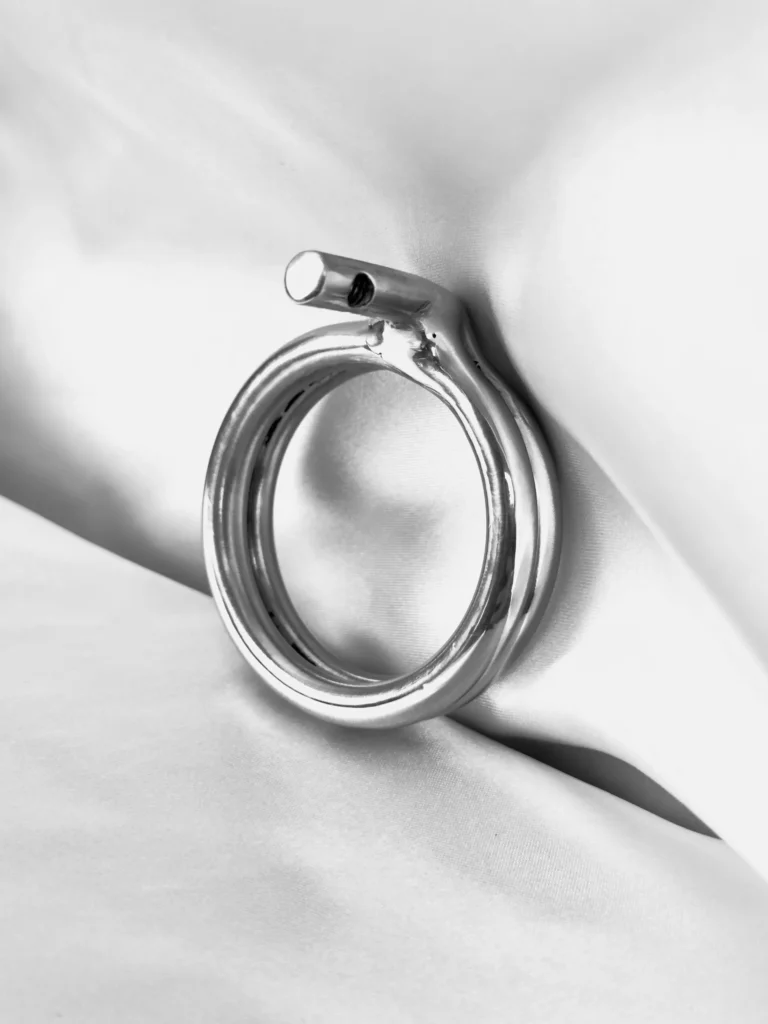
If you already know, if you’re planning regular wear or eyeing 24/7, or if off-the-shelf sizing has already failed you once, go to steel and go made-to-measure. And when you do, don’t transfer sizes from the silicone cage. Every maker measures differently, and a flexible cage teaches you very little about rigid dimensions anyway. Start fresh with our plastic sizing rings, wear them for at least a week, and order from what they tell you. Between a soft cage’s stretch and hard steel, the rings are what makes the second purchase the last one. The four sizes they produce are explained in our sizing guide, and the types guide covers the design choices that come after material.
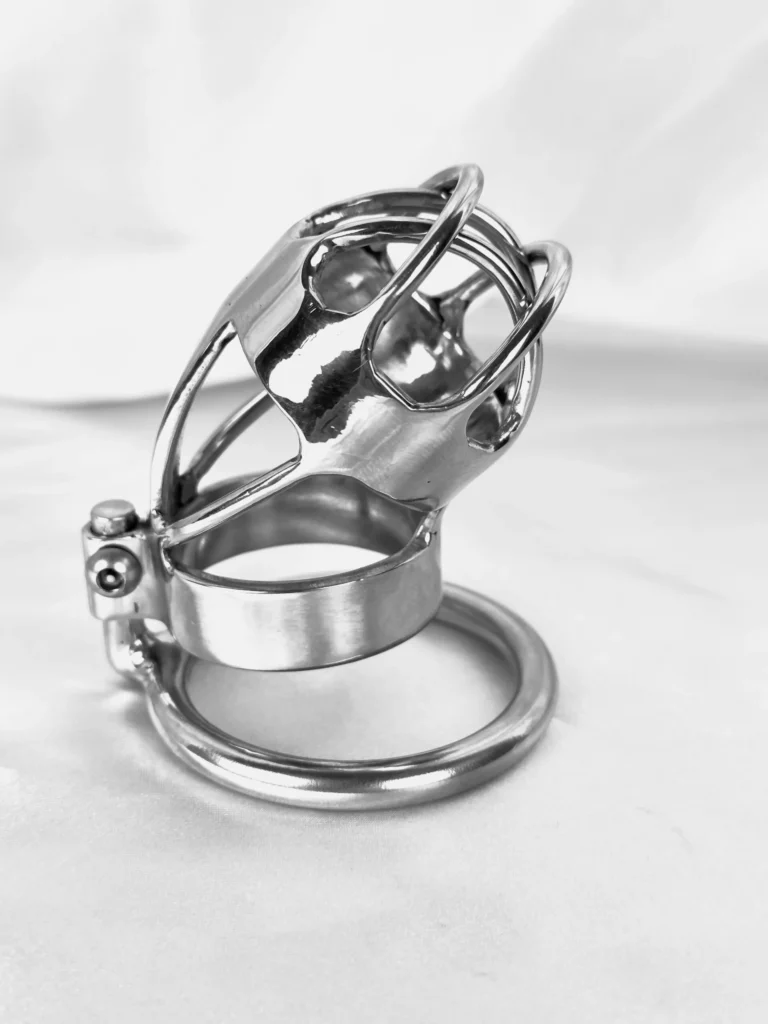
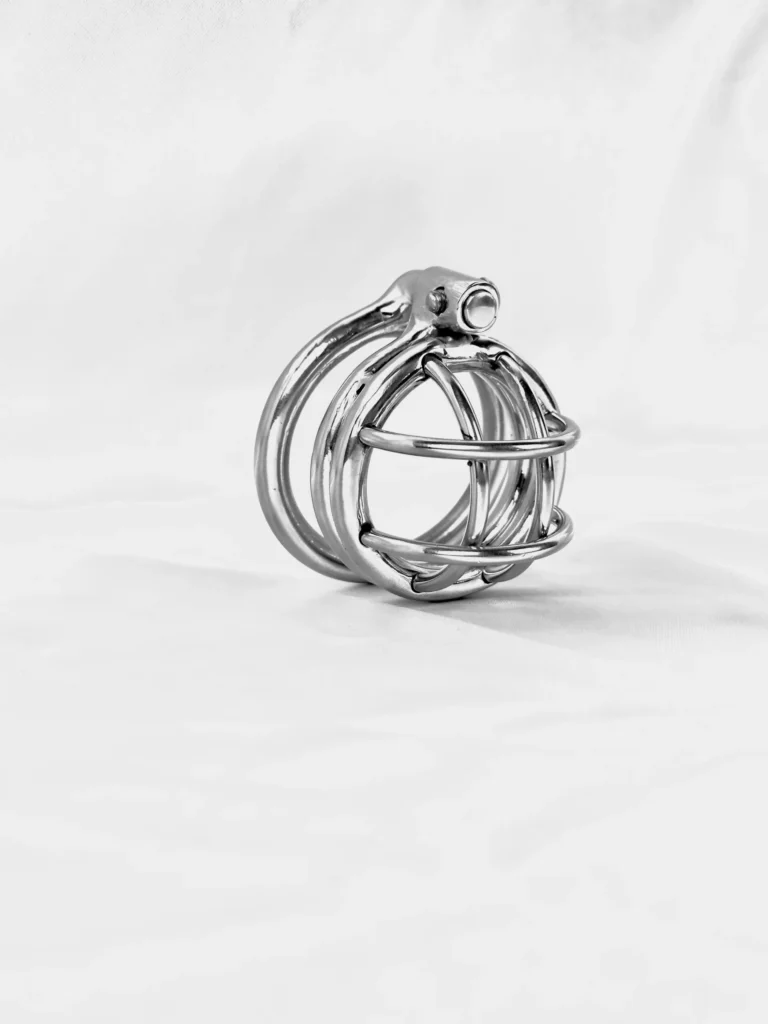
If steel is the direction, see the full range of made-to-measure designs, and remember the order of operations: sizing rings first, worn at least a week, then the device. Questions in between go to maturemetalsales@gmail.com.
Allow optional analytics to help us understand visits and purchases? Your choice does not affect shopping. Advertising tracking stays off.