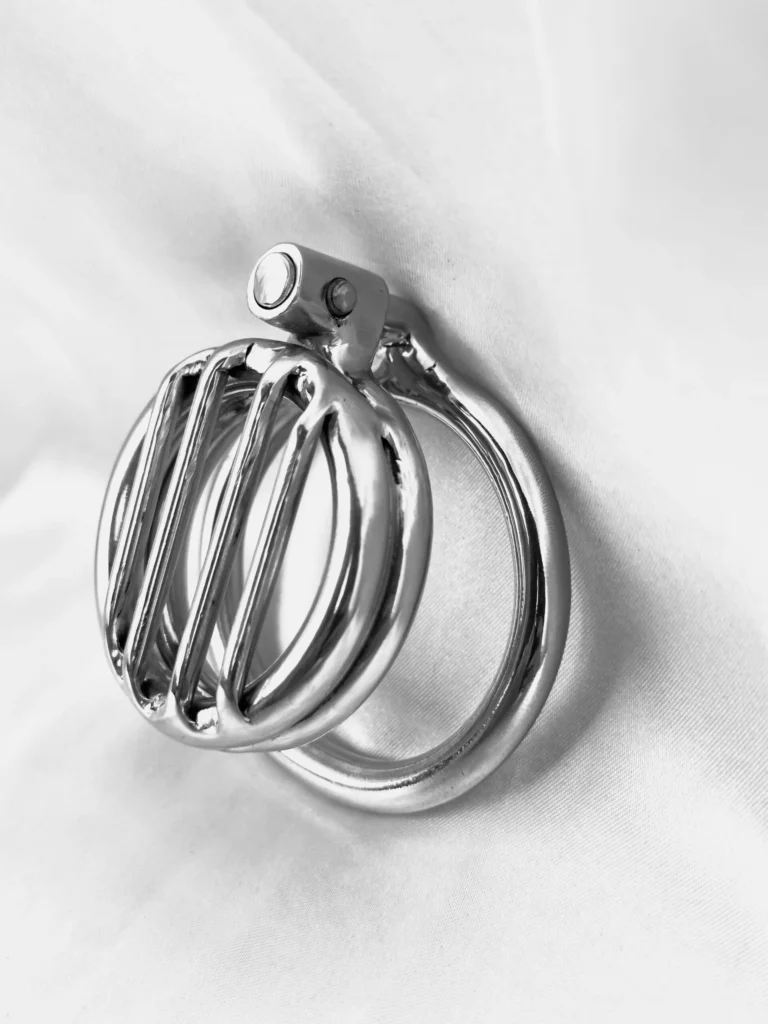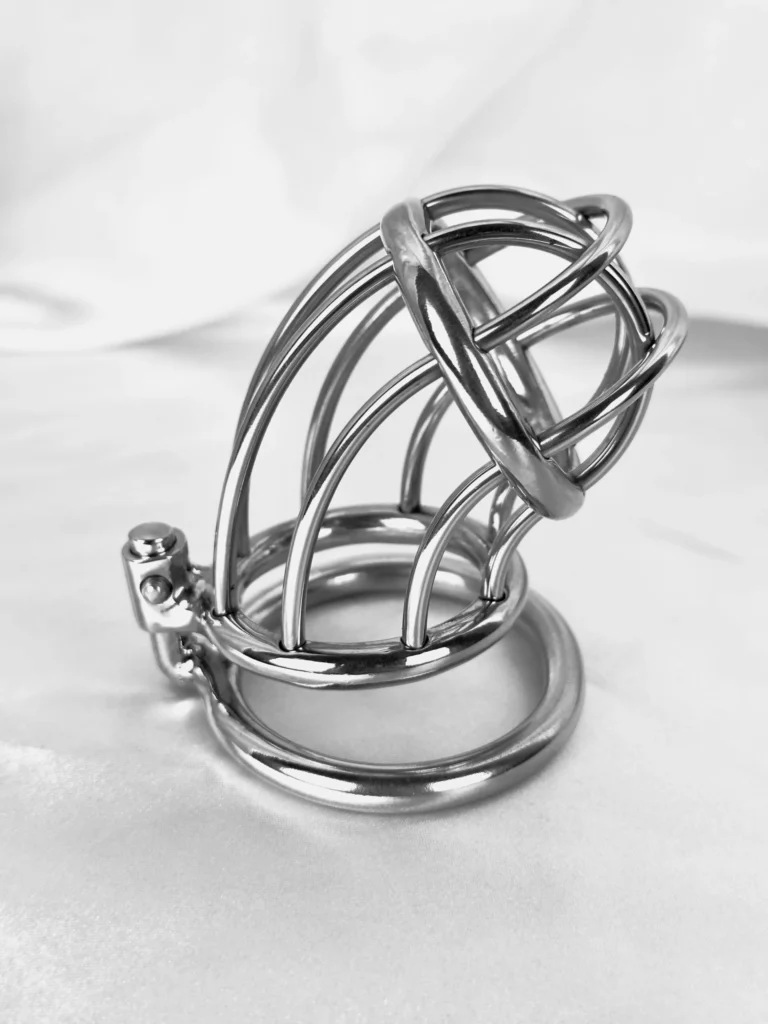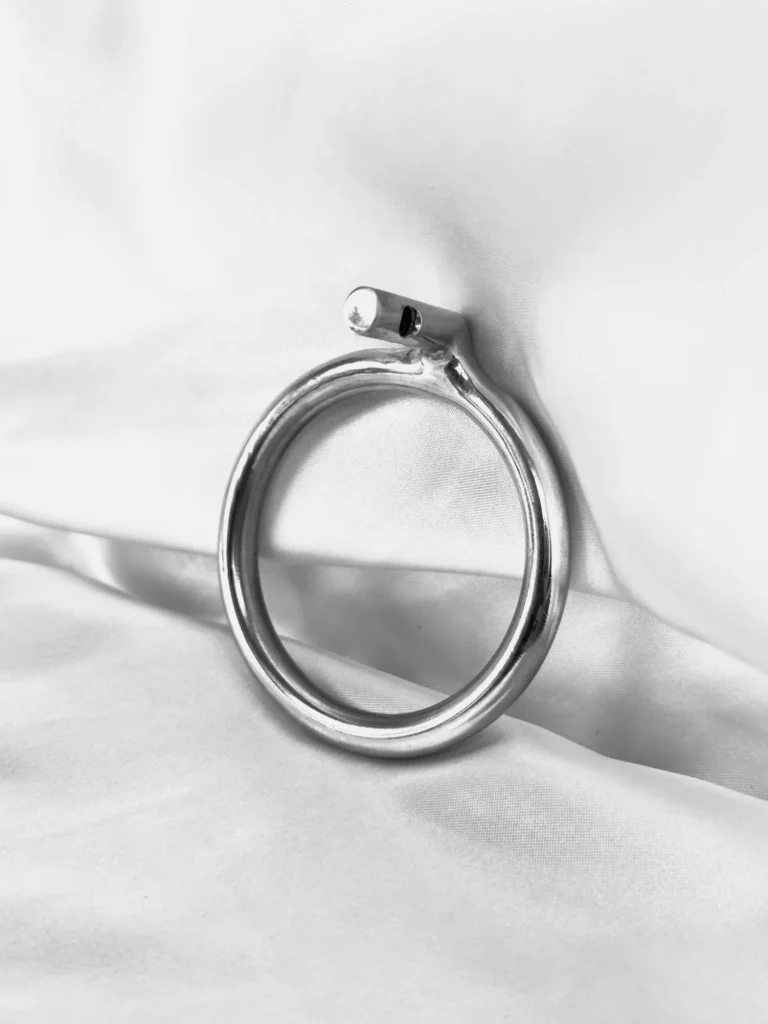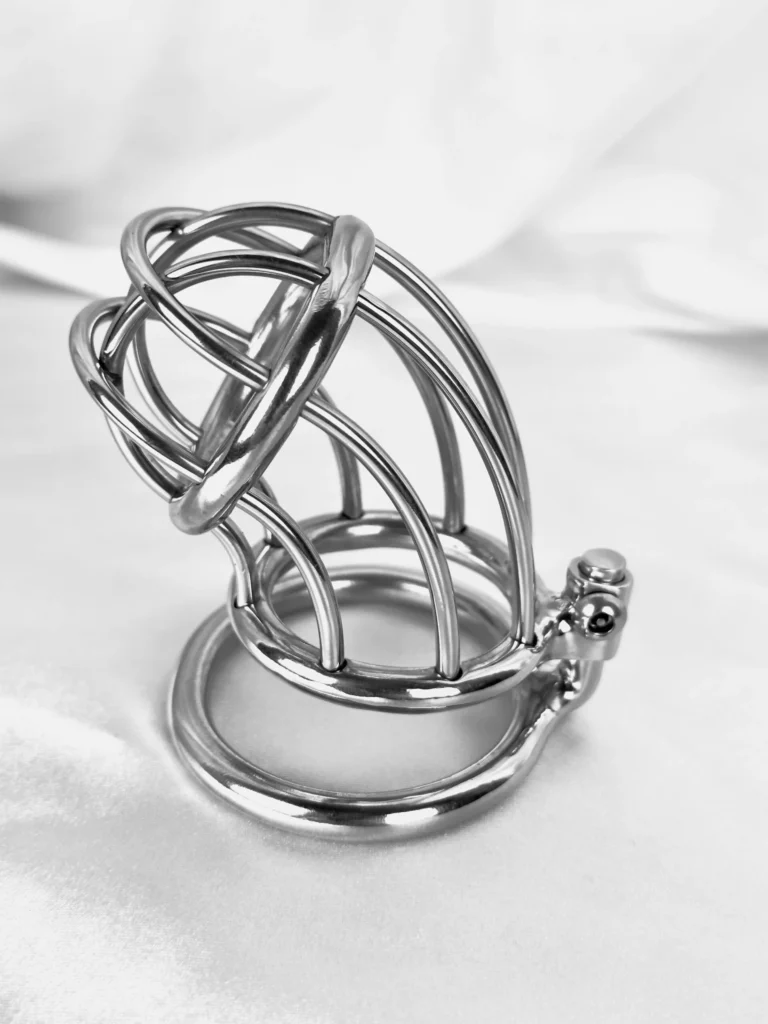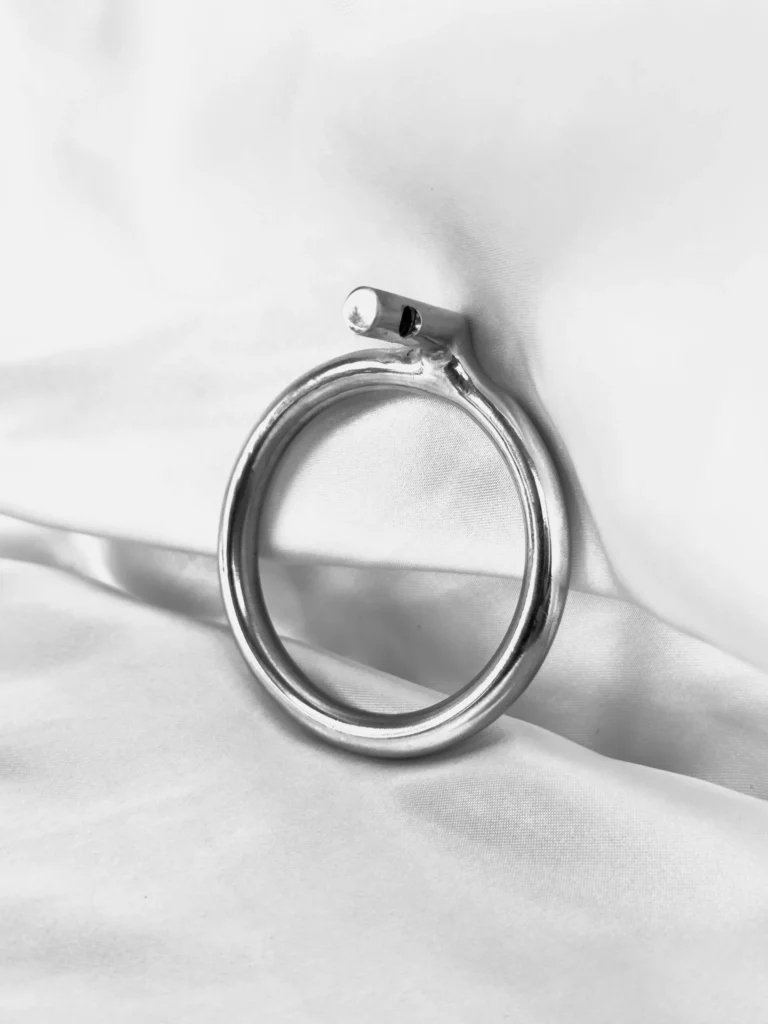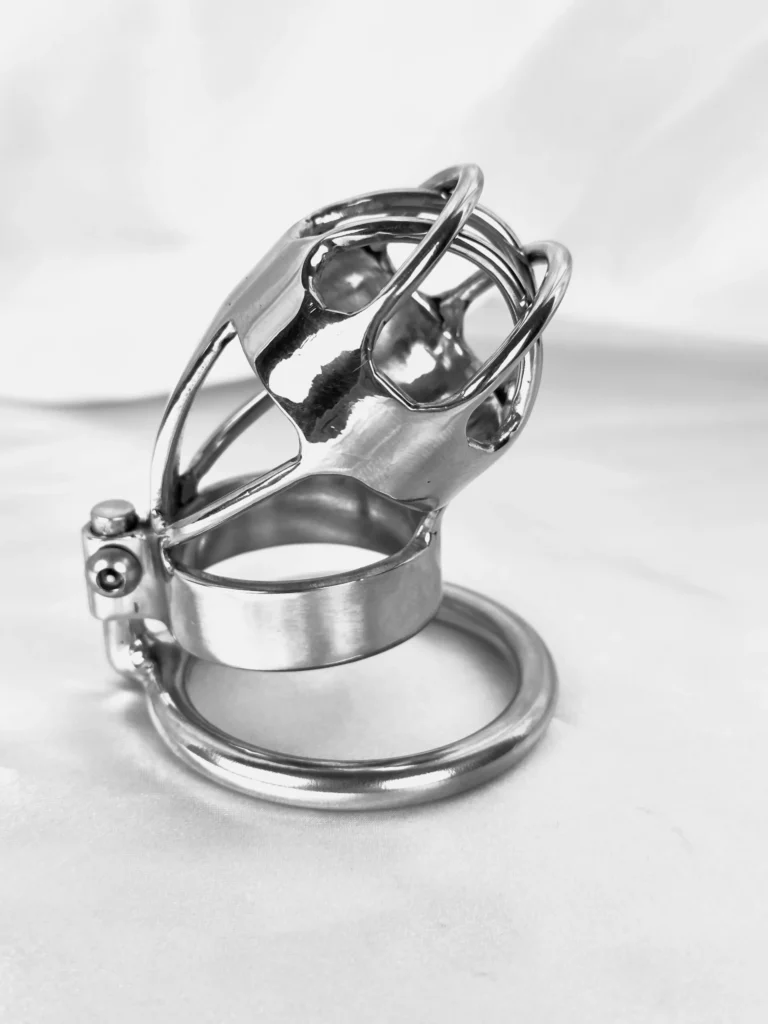
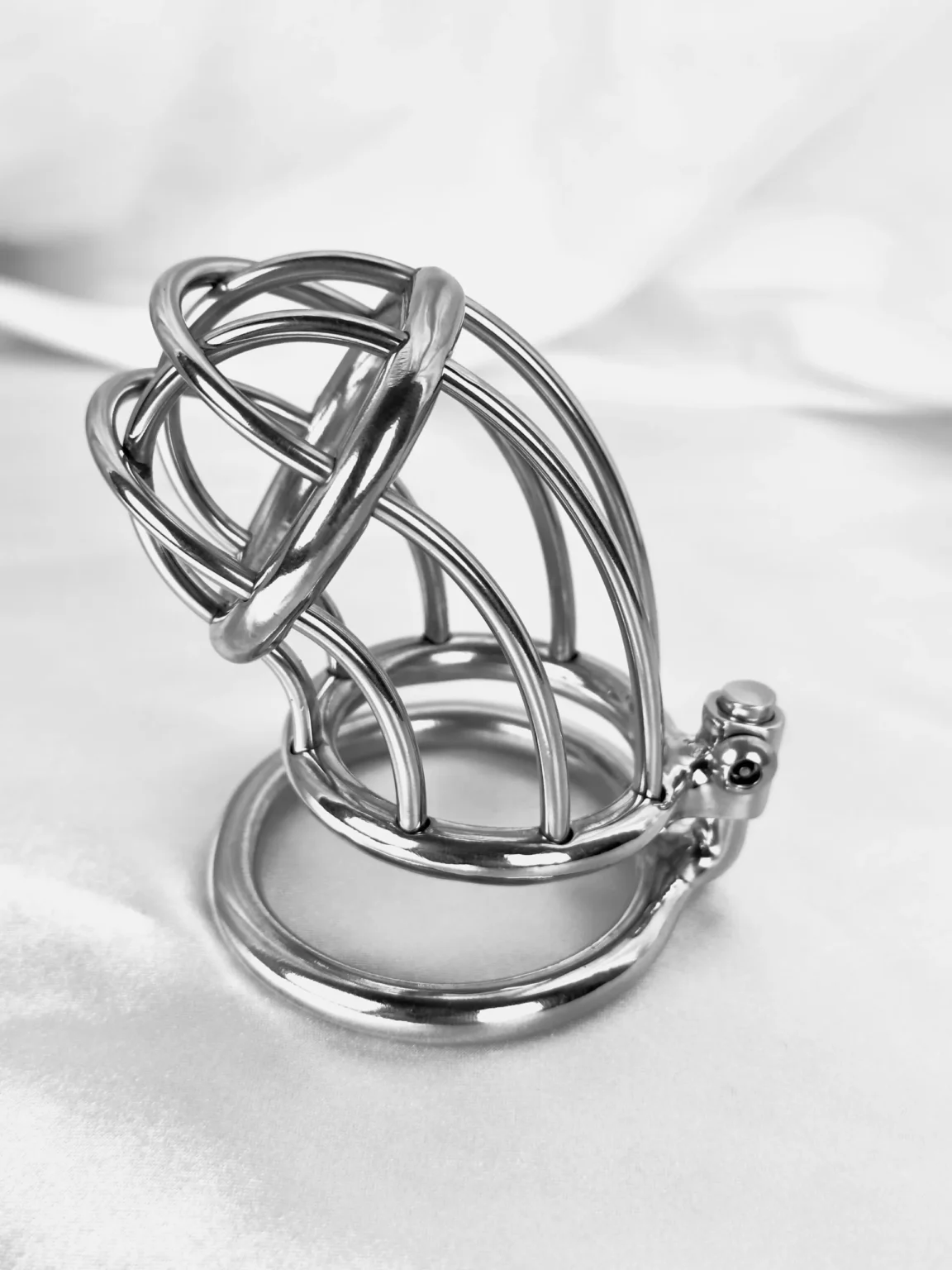
The most common chastity mistake is sizing a cage from a chart or a tape measure instead of using test rings. Almost every other mistake on this list follows from it: the cage that is too long, the gap that burns, the testicle that slips out, the “chastity isn’t for me” verdict after four uncomfortable days in a device that never fit.
We have answered fitting emails since 2009, and the same ten mistakes arrive in them week after week. None of them is embarrassing, and most are avoidable for the price of a set of plastic rings. Here they are in the order they usually happen, each with its fix.
1. Measuring diameters with a tape measure or string
A tape around the shaft, divided by pi, is the most inaccurate way to measure a chastity cage diameter. Soft tissue doesn’t hold still under a tape, so you get a different number every time, and any size chart built on those numbers inherits the error. The fix is a hard ring. The plastic sizing rings are nine rings from 1 1/8″ to 2 1/8″, the same thickness as the rings on our devices, and the right one either fits or it doesn’t. Our sizing ring article explains why a tape can’t do that job, and the complete sizing guide covers the whole process.
2. Reusing the sizes from another maker’s device
The most common first email we get asks how our sizes compare to another manufacturer’s. Every maker measures differently, and a size that fits in one brand’s device tells you very little about ours. Most of the time it is better to start fresh with the sizing rings, even when the old cage feels “comfortable enough.” The standard we build to is stricter than comfortable: the best cage is one you forget you are wearing, and feel like you are forgetting something when it is off.
3. Ordering the cage too long
More room sounds kinder, so beginners round up. A cage with extra length lets too much blood in during an attempted erection, and the added blood flow lets the cage pull away from the body with more force, and that is what hurts. It is like filling a balloon halfway: more pressure than if there were no room at all. A too-long cage also shifts all day and carries weight you don’t need. The fix: hard ruler under the penis, just touching the scrotum, several readings at different times of day, shortest reading minus 1/4″. A cage that comes out a little short is normally not an issue. A lot of our clients prefer one, and the short, mini and micro article explains why.
4. Guessing the gap
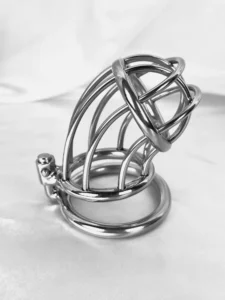
The gap is the space between the base ring and the cage, and it does the trapping: the testicles sit outside it and can’t pass between the ring and the cage, which is why the device can’t be pulled off. There is no good way to measure it, so it is chosen, and beginners often choose the biggest one for comfort. That backfires. A gap that is too big is the first cause of testicles slipping out. A gap that is too small shows up as a burning sensation in the scrotum, often overnight. Stomach pain, or testicles that feel like they are in a vise, means the gap is most likely too big. Start at 3/8″; it fits most of our clients. Go to 1/2″ for a high and tight scrotum or a history of that burning feeling, and 1/4″ for a low-hanging scrotum. Unlike the cage diameter, the gap is easy to adjust later, and we will talk you through it. Our article on testicles slipping out has the full cause list.
5. Measuring at the wrong moment
The test rings only work at your normal flaccid state, and the instruction sheet has its rules for a reason. Never measure right after a shower, hot or cold. Measure alone, with the Keyholder out of the room. Run the base ring test and the cage diameter test as two separate tests, one ring on at a time, never together. And once a ring is on, do something boring until you are back to normal; watching TV helps. The official measuring guide has all of this on one page.
6. Buying a closed tube because it looks more secure
A solid tube photographs like security. In practice it traps urine no matter what it is made of, and it can’t be dried once it is washed in place. In plastic or silicone, the smell can become impossible to clean out once it is embedded. Bacteria grow inside a closed cage unless it comes off for a proper cleaning, which means the Keyholder is handing over the key every day just to keep it fresh; that is not a low-maintenance cage. An open bar design washes in the shower with mild antibacterial soap and dries through the bars, no key required. The open versus closed comparison and the daily cleaning routine cover both sides.
7. Ignoring the lock
The lock is not an afterthought. A lock with a shank that is too thin lets the base ring swing to the side, and that swing is the second most common reason testicles slip out. Two options work on our cages. The Abus padlock has a shank of exactly the right thickness for our devices, resists rust, sits sideways against the body and makes no noise. The security screw goes into the same threaded hole and has no matching tool at any hardware store. Either holds the ring where it belongs, and the two are interchangeable. If you have worn an Abus for years and the ring has started to swing, the lock has worn down; all that’s needed is a new Abus lock.
8. Treating pain as part of the deal
A caged erection is pressure, never pain. The cage doesn’t stop the erection; it just doesn’t allow the penis to grow, and the pressure that produces is a reminder that the Keyholder is in control. Real pain is a sizing message, not a toughness test. Puffy skin means the cage diameter is too small. Shifting and weight mean it is too long. Burning in the scrotum points to the gap. Remove the cage for pain or any other emergency, then work out which size is wrong. Seven ways a cage fits wrong matches every symptom to its fix, and how long you can wear a cage covers the wear-time side.
9. Wearing it on dry skin, and drinking too much before bed
Dry skin drags against any cage. After you wash and dry the device, use some type of oil so the cage slides over the skin; we recommend baby oil gel, and a drop under the base ring and around the cage before bed makes nights easier. Then there is the double whammy: waking with an erection and a full bladder at the same time. The only solution in the moment is to sit on the toilet until the erection subsides, so try not to drink a lot of liquids right before bed, and keep the key handy in the early weeks. A cage that is comfortable by day can feel totally different at night, and what actually happens when you sleep in a cage has the rest.
10. Locking up before the two of you have agreed on anything
A chastity cage is a shared object. The Keyholder holds the key and makes the decisions, and a lockup that starts as a surprise, or without any talk about what happens when the wearer needs out, rarely lasts. Agree the basics first: the Keyholder holds the key; the wearer can ask for release at any time and gets it immediately; a real emergency ends the lockup, no discussion. That baseline makes everything else possible. If the conversation itself is the hard part, how to talk to your partner about trying chastity is written for exactly that moment.
The chastity cage tips that prevent all ten
- Rings before steel. Two diameters from the sizing rings, one length from a ruler, one gap chosen. Nothing else counts as a measurement.
- Shorter, not longer; 3/8″, not the biggest gap. When in doubt, those two defaults are right far more often than not.
- Symptoms are sizes. Pressure is normal. Pain, burning, puffiness and slipping are each a specific size asking to be changed, and on our devices every size except the cage diameter can be changed by us after delivery.
Frequently Asked Questions
What is the most common mistake with a chastity cage?
How do I know if my chastity cage is the wrong size?
Should a chastity cage hurt?
What are the best beginner chastity tips?
Skip the first nine mistakes for the price of a set of rings
Order the plastic sizing rings, follow the instructions in the box, and email us your numbers before you order a device. Most of what we answer is sizing questions, and the tenth mistake is the only one we can’t fix from the workshop. Email us with anything the rings leave open.