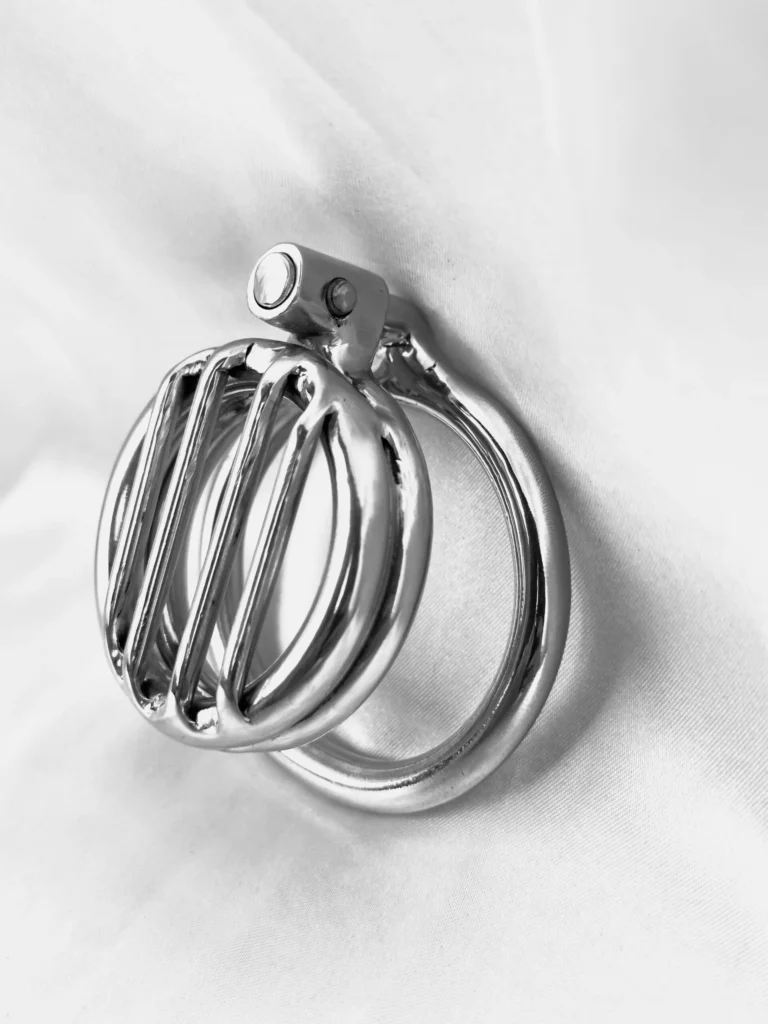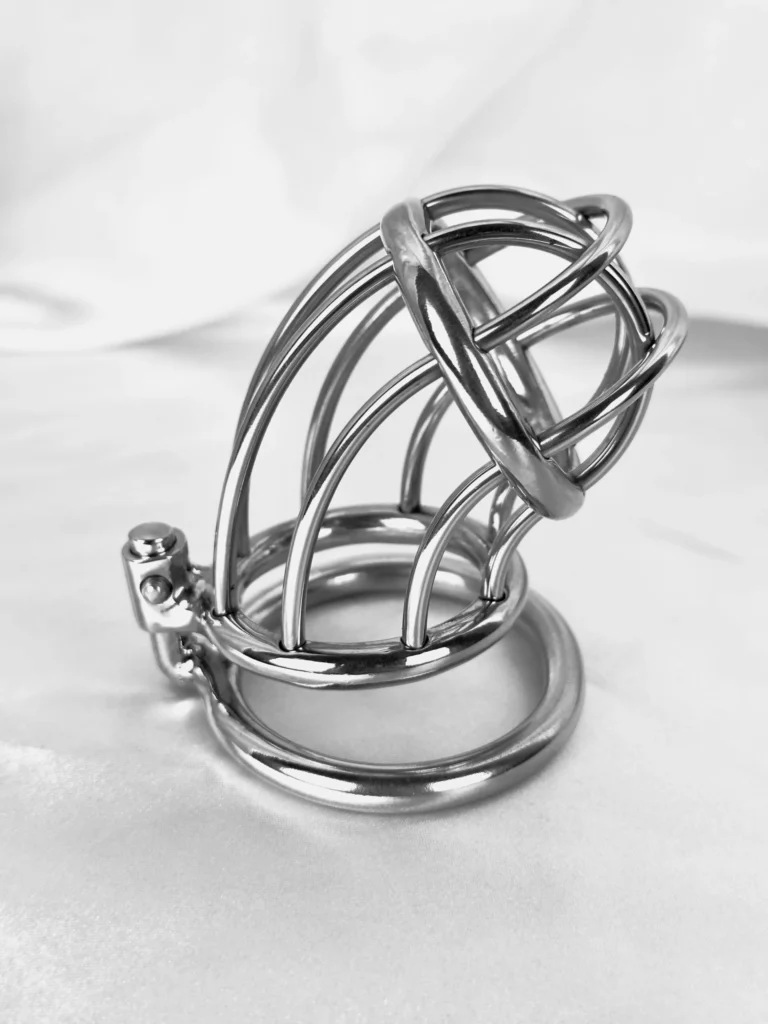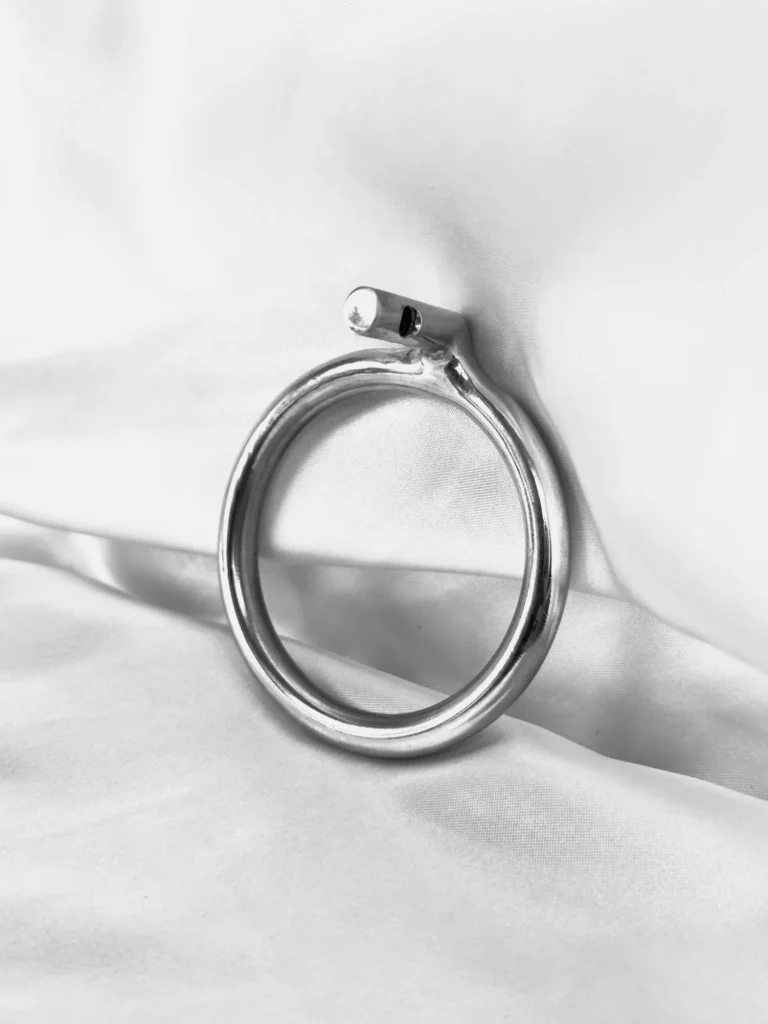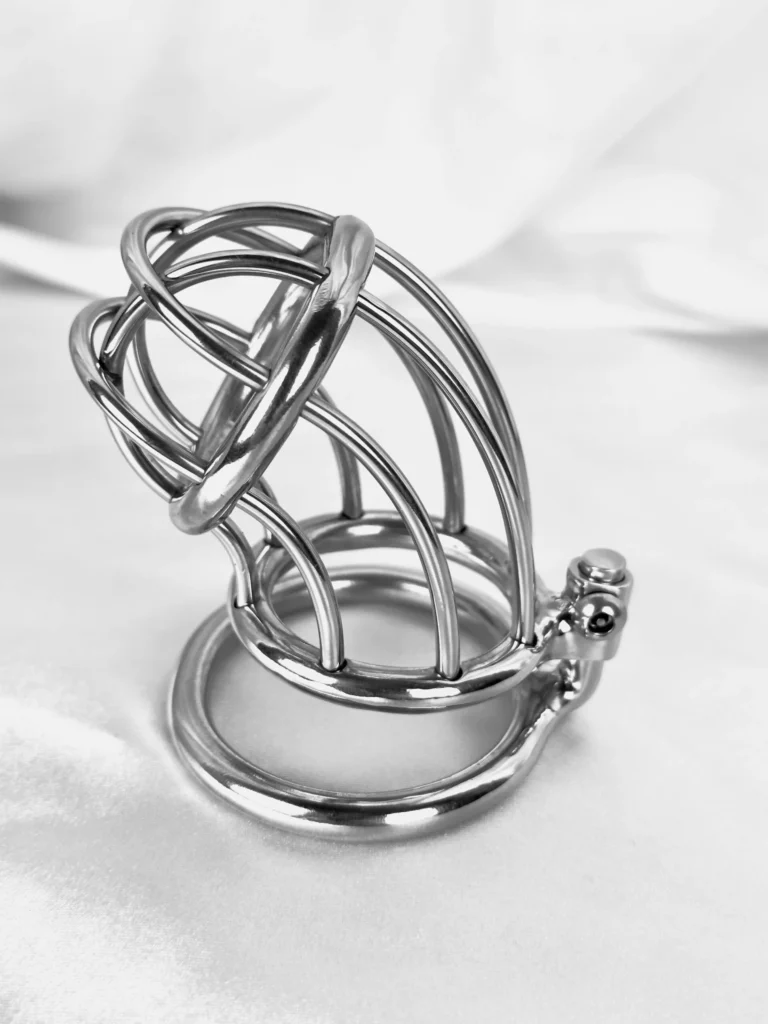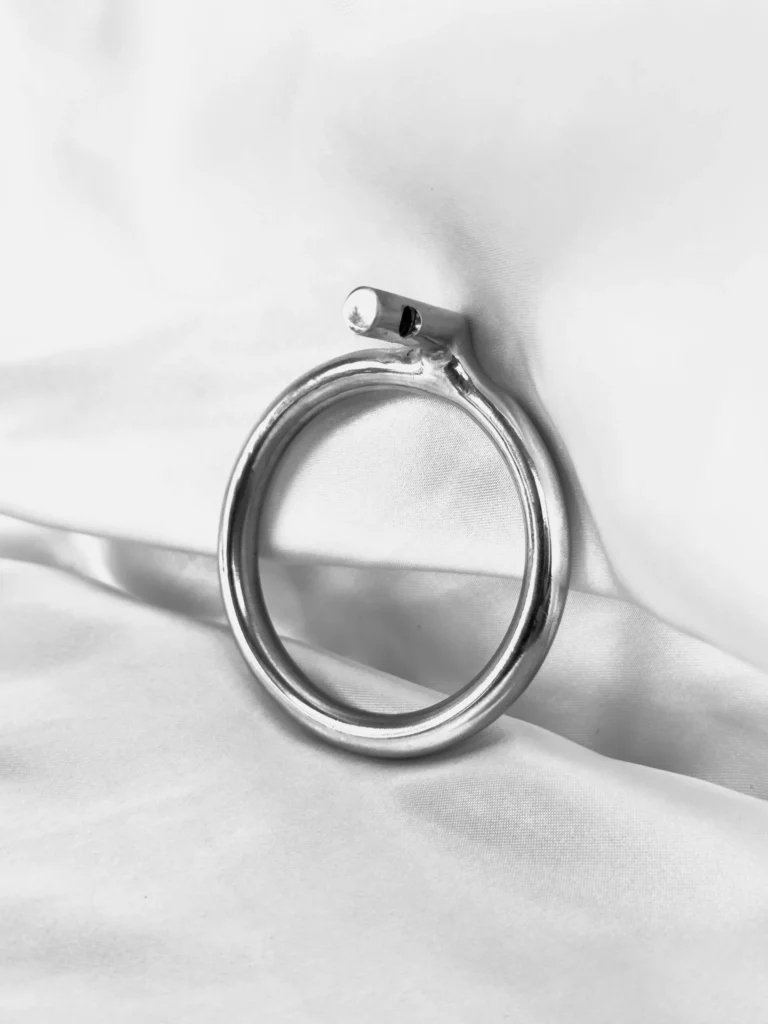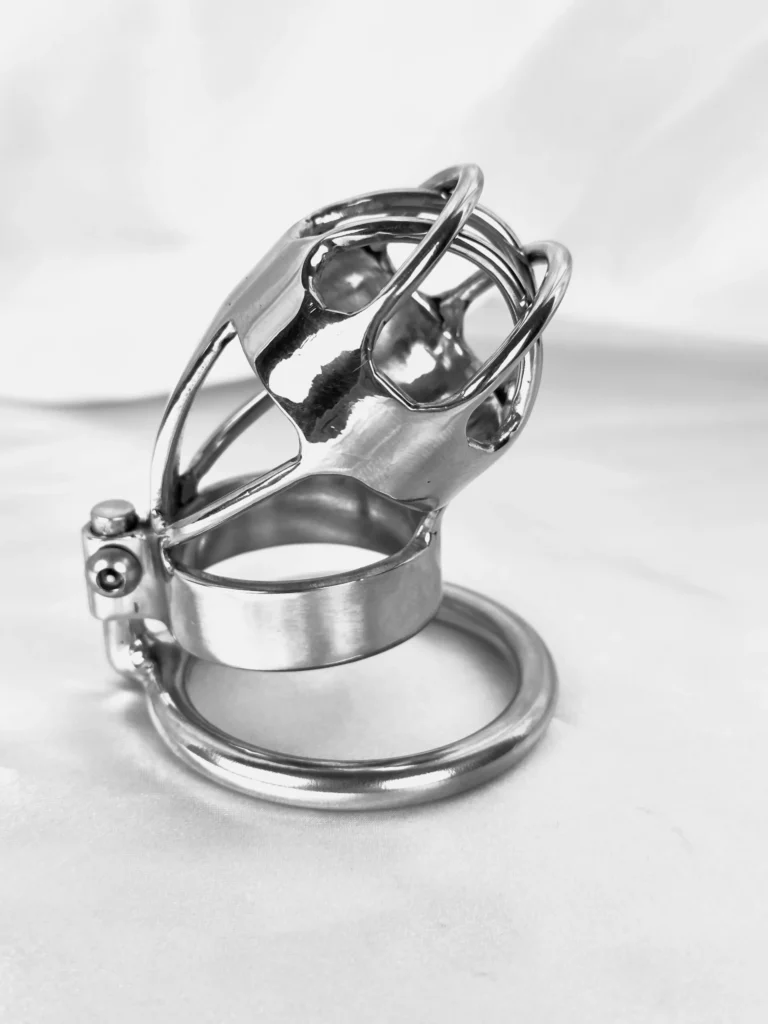
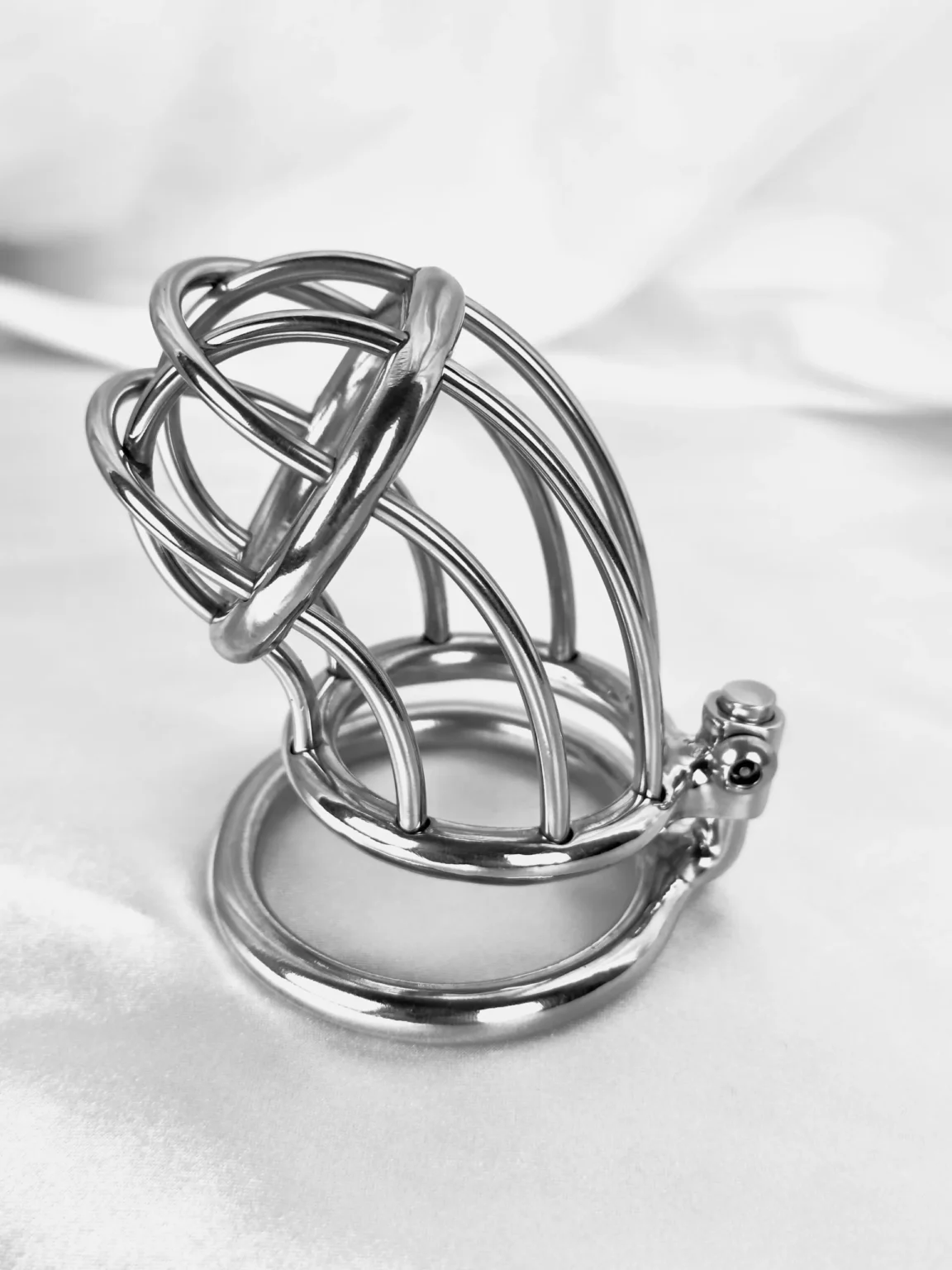
The best chastity cage is one built to your own measurements, in stainless steel, in an open design you can wash without a key. It is close to the opposite of what most beginners buy. The usual first purchase is a standard-size plastic tube picked off a size chart, worn for a week, and retired to a drawer.
We have been making custom steel cages since 2009. The emails we answer from first-time buyers rarely ask about design or price. They ask why the cage they already own doesn’t fit.
If you are still deciding whether chastity is for you at all, start with what a chastity cage is and who wears one and come back here when the answer is yes.
Fit is the whole decision, so it comes first
Every cage we build is defined by four sizes, and the same four decide the fit of any cage: the inside diameter of the cage, the inside diameter of the base ring, the length of the cage, and the gap between the ring and the cage. A beginner that gets those four sizes right is comfortable on day one. Get one of the sizes wrong and you may not want to wear the cage at all.
The four sizes are not equally forgiving. This is the part of male chastity for beginners that nobody explains up front, so here it is in a table.
| Size | How you find it | Can we adjust it after delivery? |
|---|---|---|
| Cage inside diameter | Wear the test rings on the shaft at your normal flaccid state. The right ring just indents the skin. | No. This is the one permanent size. Wrong means a new cage. |
| Base ring inside diameter | Wear the test rings behind the testicles. Exactly one finger fits under the top of the ring, to the first knuckle, without forcing. | Yes |
| Cage length | A hard ruler under the penis, just touching the scrotum. Take several readings; the shortest one minus 1/4″ is your length. | Yes |
| Gap | Chosen, not measured. 3/8″ fits most of our clients. | Yes, to any size |
The cage diameter can never be adjusted; it is set the moment the cage is built. The other three we can adjust for you later, years later if needed, which is not something most makers offer. So the first job of a first cage is getting the cage diameter right. Everything else has a safety net.
If you take one sentence from this guide, take this one: do not measure diameters with a tailor’s tape or a piece of string. It is the most inaccurate way to measure, and it is the single most common reason a first cage fails. Our complete chastity cage sizing guide walks through the whole process, and the official measuring guide is the short version. Both come back to the same tool: the plastic sizing rings, a set of nine hard rings from 1 1/8″ to 2 1/8″ (about 29 to 54 mm) that you use to find your two diameters before any steel is cut.

What a good beginner chastity cage looks like
Design matters less than fit, but it still matters, and a few choices make the first months easier.
Open bars over a closed tube. A closed tube looks more secure in a product photo. In daily life it traps urine, no matter what material it is made of, and it cannot dry once it is washed in place. An open bar cage washes with soap and water in the shower, no key needed, and dries through the bars. That one difference decides whether the cage gets worn or stored. Our open bar versus closed tube comparison goes through it in detail.
Short over long. Beginners almost always order too long, because more room sounds kinder. It works the other way round. A cage with extra length lets too much blood in during an attempted erection, and that added blood flow lets the cage pull away from the body with more force. It is like filling a balloon halfway: more pressure than if there were no room at all. A cage that is a little short is normally not a problem, and a lot of our clients prefer one. Our short, mini and micro cage article makes the full case.
A base ring that holds the cage up without pulling. The base ring does one job: holding the cage up. On the Jail Bird it is 1/4″ round bar, and you can have it round or oval at no extra charge. The oval ring has the same inside diameter as the round one, just shaped wider than it is tall, which evens out the diagonal gap between ring and cage all the way around. Many clients find that more comfortable and more secure. The oval or round base ring article explains the geometry.
A real lock. Two options on our cages: an Abus padlock, or a security screw that goes into the same threaded hole. The Abus is very well made, resists rust, sits sideways against the body rather than dangling, and holds the ring in place so it can’t swing side to side. The screw is a special design made just for our cages, with no matching tool at any hardware store. The two are interchangeable, so a beginner can start with the padlock and move to the security screw later.
For a first order, the Jail Bird is our most sought-after device and the design most of this advice is written around: open bars of 1/4″ and 1/8″ round bar, about 5 oz in an average size, built to your four sizes. If your measurements run small, the Mini Jailbird and the Micro Jailbird are the same idea in the shortest lengths we can build. Every type of chastity cage covers the other designs, and you can browse the full range at any point.

Custom or off the shelf for a first cage?
This is the question underneath most chastity for beginners searches, and the honest answer has two halves.
The case for off the shelf is real. It costs less, it arrives in days, and if you are not sure chastity is for you at all, a low-cost device settles that question without much at stake. Plastic is also easier at airport security, since steel always sets off a metal detector.
An off-the-shelf cage comes in a handful of sizes, and if the one you pick is wrong, a whole new cage must be purchased. Plastic has a second problem we hear about constantly: it sticks to skin. During an attempted erection the skin can fold into the cage or the ring, and the blood-flow pressure pinches. That is worse in public or at work. Skin moves easily across smooth stainless, which is a large part of why steel gets worn and plastic gets stored. The metal versus plastic comparison is our full and fair version of that argument.
Our recommendation for a first cage is not “buy the expensive one.” It is “buy the sizing rings first.” For a fraction of the price of any device, the rings give you the two diameters no chart can, and the numbers they give are the numbers we build to. In our experience most of the disappointment in a first device comes from the size, not the material, and the rings fix the size.
What you are paying for
We keep prices out of articles because they change; the product pages are current. What we can tell you is where the money goes.
A custom steel cage is built to order in our workshop, and that is why it takes 6 to 8 weeks from the day you order, not counting shipping. Rush builds are available for a fee, in as little as 1 to 2 weeks. The steel is 316 and 304 stainless, the same material class used for body jewelry and medical implants, and it won’t corrode in a chlorinated pool or in saltwater. The 316 stainless article explains why we use nothing else. With proper care, a steel cage will last a lifetime.
Two things come with the device that don’t show on a price tag. Custom devices carry a lifetime warranty against manufacturing defects. And the base ring diameter, the gap, and the length can be adjusted by us later if your body changes. That is the real difference between a first cage and a last cage: a fitted steel device is usually the last one you need to buy.
We ship worldwide in discreet, unmarked packaging. International buyers cover their own duties and taxes.
How a first order actually works
The process has three steps, and the first one does most of the work.
1. Order the plastic sizing rings and follow the instructions. The set has nine unnumbered rings, so you lay them out smallest to largest. You run two separate tests, base ring and cage diameter, one ring on at a time, alone, at your normal flaccid state, and never right after a shower. The instruction sheet in the box walks you through it, and our sizing ring article explains what the results mean.
2. Take your length with a hard ruler. Under the penis, just touching the scrotum, without pushing in. Several readings at different times of day. Shortest reading minus 1/4″ is your cage length.
3. Choose a gap and order the device. 3/8″ is the default and fits most of our clients. 1/2″ suits a high and tight scrotum, or anyone who has felt a burning sensation in the scrotum with a previous cage. 1/4″ suits a low-hanging scrotum. If you are unsure, email us your numbers before you order. Sizing questions are most of what we answer, and one of the two of us who run the workshop answers them personally.
Once the build starts, there is a small window for making changes, and sometimes for a fee. Please let us know as soon as possible if any revisions need to be made.
The first week in a first cage
Our devices are designed with 24/7 wear in mind, but start slowly and listen to your body. Some adjustment in the first days is normal; significant pain never is. Remove the cage for pain or any other emergency, and read how long you can wear a chastity cage before you settle into a routine. Putting it on takes a minute once you know the technique, and our step-by-step guide covers every design.
A correctly sized cage holds itself up without pulling, and before long you forget it is there. If yours shifts all day, keeps reminding you it is there, or leaves a burning feeling in the scrotum overnight, that is a sizing message, not a toughness test. Our seven fitting problems article matches each symptom to its fix. Cleaning is a shower job with mild antibacterial soap (the daily routine), and the first night has rules of its own (what happens when you sleep in a cage). If you can’t sleep in it, that is almost always length or gap, not chastity.
Frequently Asked Questions
What size chastity cage should a beginner get?
Is a metal chastity cage a good choice for beginners?
How long does a custom chastity cage take to arrive?
Should my first cage be short?
Can a first cage be adjusted if my measurements change?
Ready to size your first cage?
Order the plastic sizing rings, follow the instructions in the box, and email us your numbers before you order the device. Fitting questions are most of what we answer, and we would rather answer them now than after your first cage arrives. Email the workshop with anything the rings don’t settle.