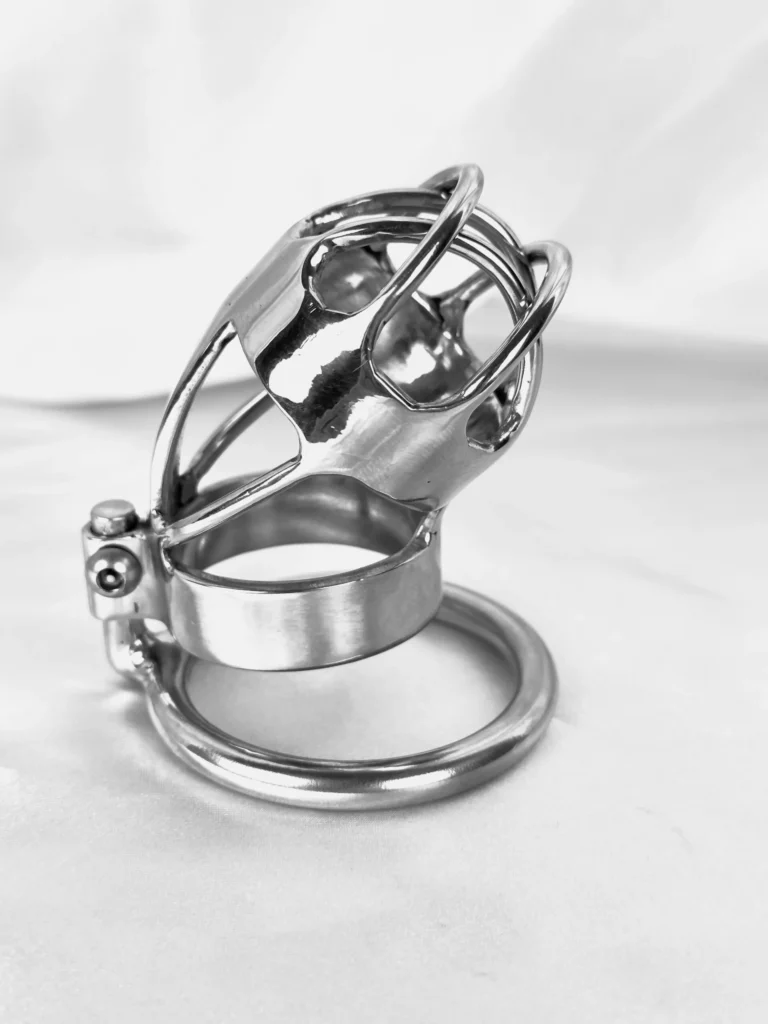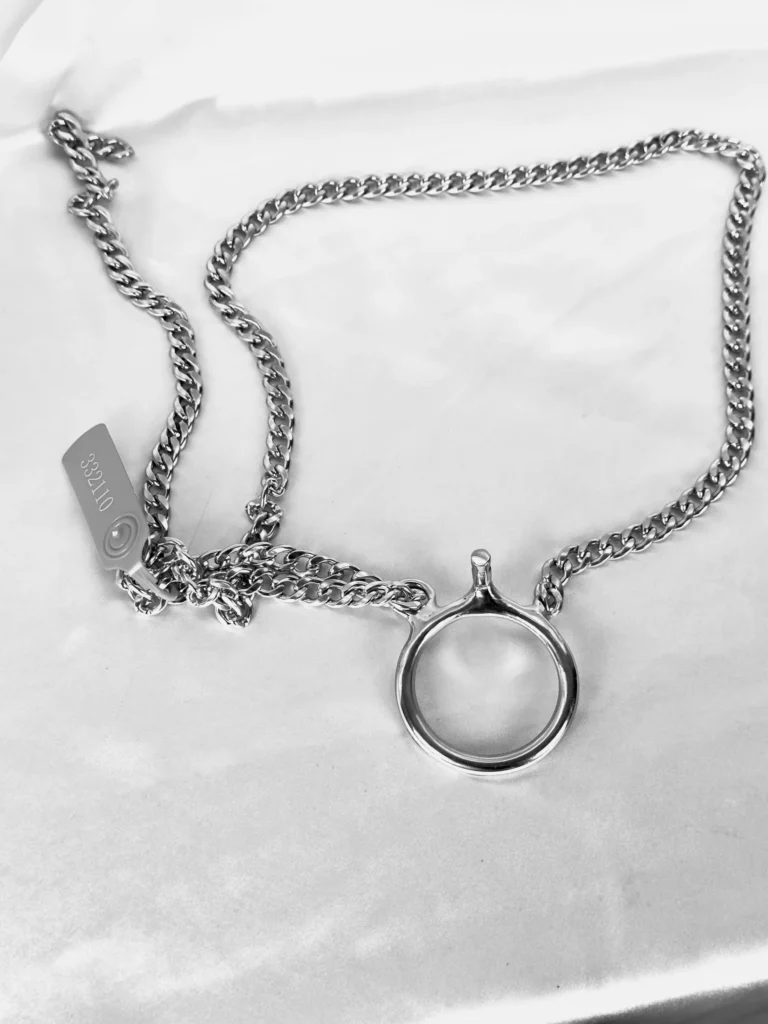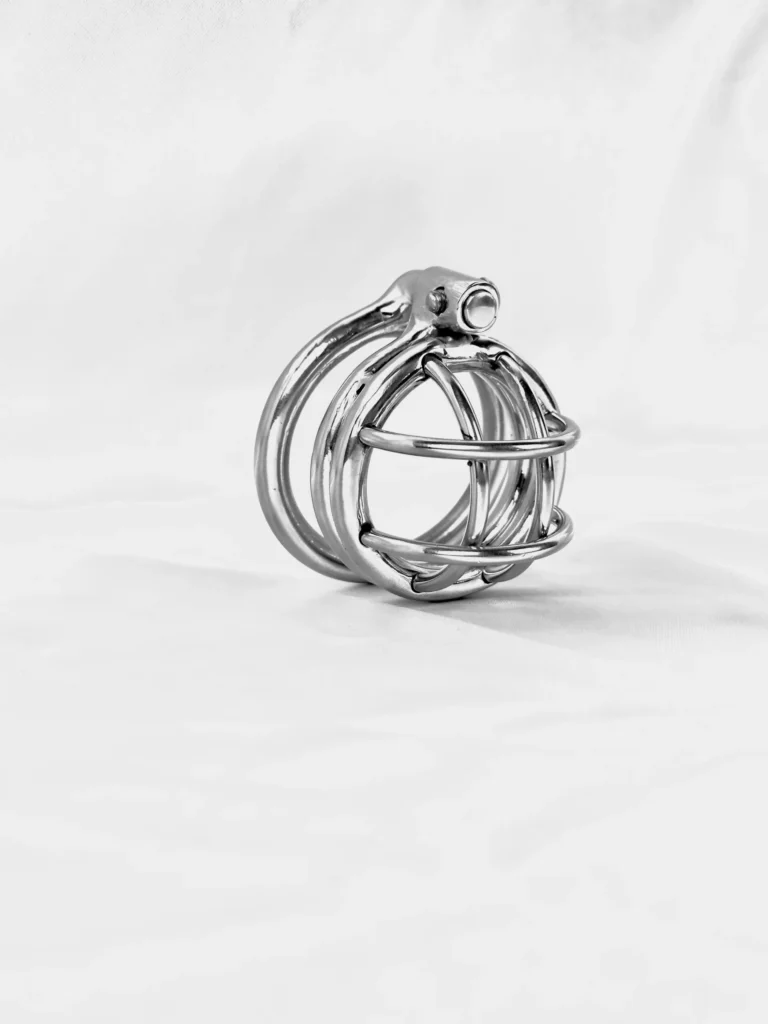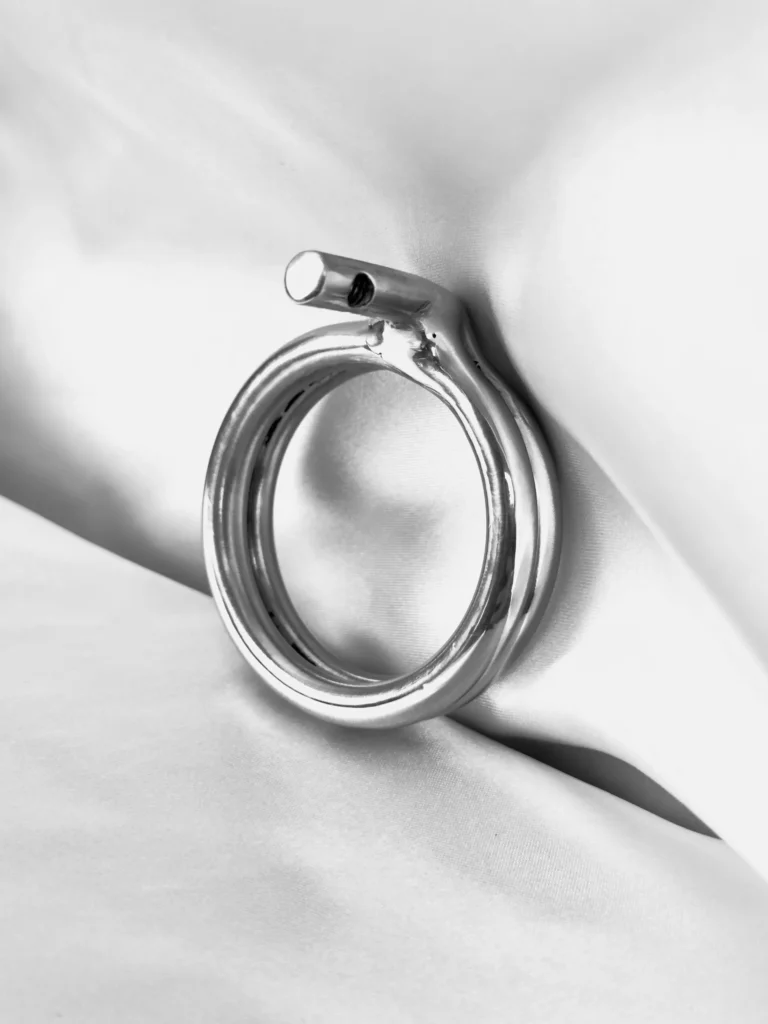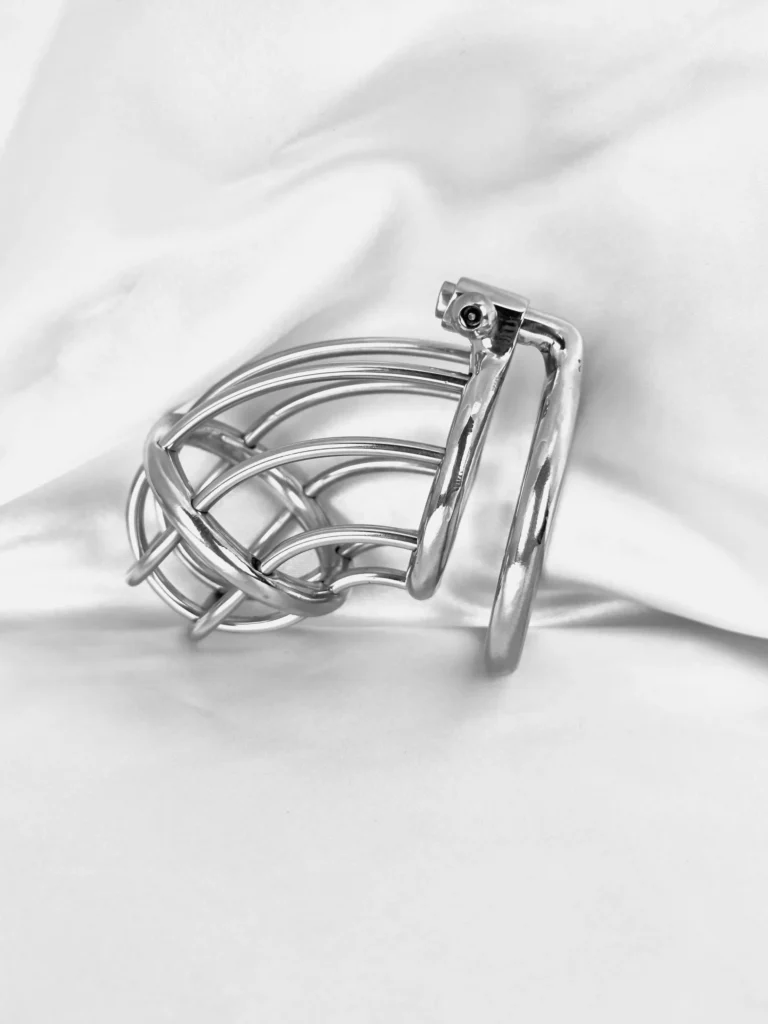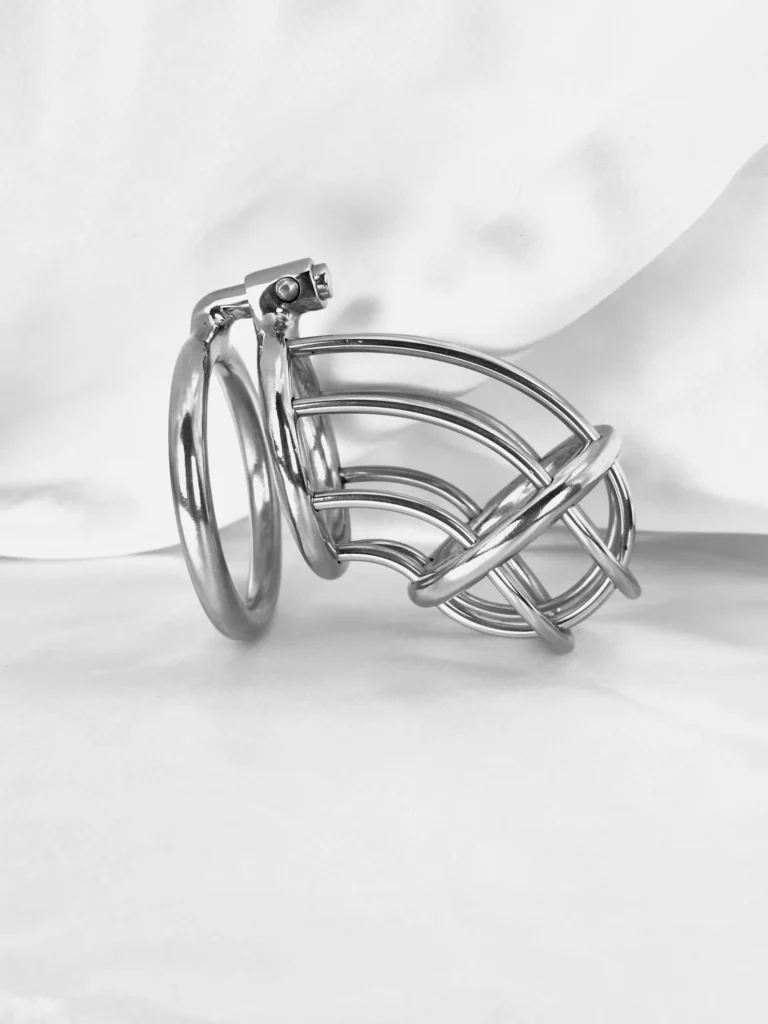
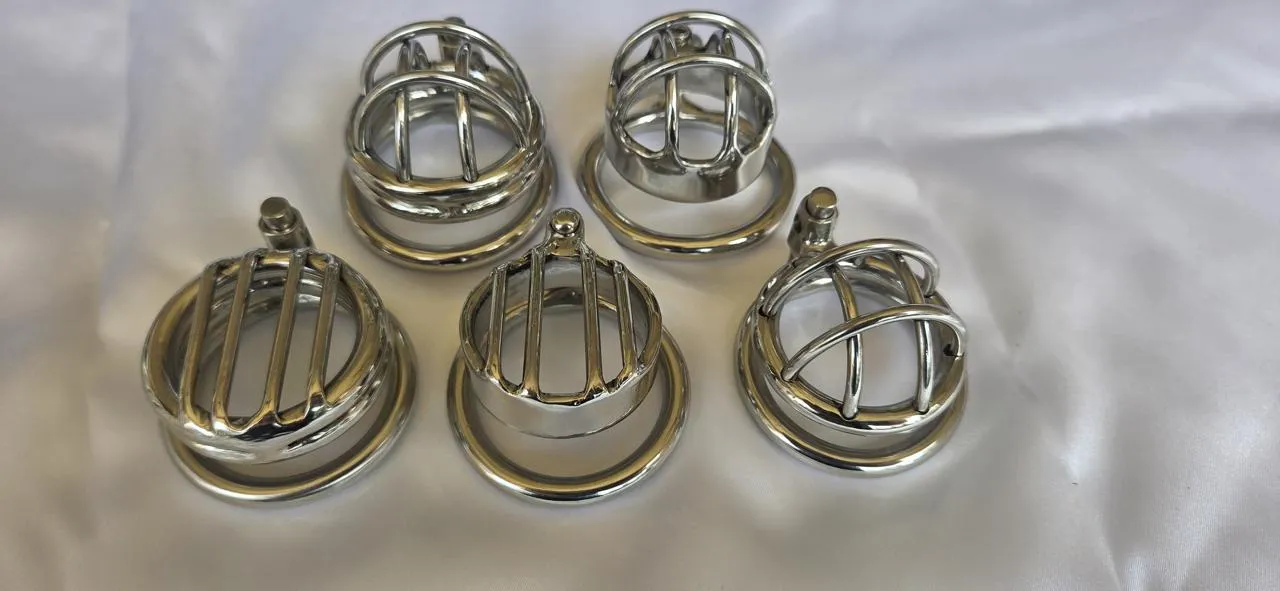
A chastity cage is a lockable device worn over the penis that prevents erections, sexual contact, and orgasms. There is a ring called a base ring that sits behind the testicles. There is a tube that is locked onto the ring that traps the testicles on the outside in the gap. The testicles can’t pass between the tube and the ring, so the chastity can’t be removed.
That’s the whole answer to “what is a chastity cage” in four sentences. The longer answer is more interesting: how the device behaves on an actual body, who wears one and why, and how could a cage ever be comfortable. We’ve been building custom steel cages since 2009, so we’ll keep this practical.
Every cage, whatever the material, has the same anatomy. A base ring sits behind the testicles and around the top of the shaft, anchoring everything. The cage itself encloses the penis. A lock (or a security screw) joins the two, and a small gap between ring and cage leaves room for the scrotum, trapping the testicles out to prevent removal.
The chastity cage meaning most people are actually after is the second half: what it’s for. The device makes arousal possible and completion impossible. Erections still start; the cage holds them back. So the cage doesn’t prevent erections, it just doesn’t allow the penis to grow.
Yes. If you’ve been wondering what a cock cage is, you’re asking about the same device. Cock cage, chastity device, male chastity cage all describe one object. Retail listings lean toward “cock cage,” the community tends to say “device” or just “cage.” Use whichever term you like; the hardware doesn’t care.
The base ring goes on first: one testicle through at a time, then the penis tucked through after them. The cage slides over the penis, lines up with the ring, and the lock closes across both. Done properly, putting a cage on takes about a minute.
Flaccid, when a cage is well fitted the wearer will fill the cage in length and girth when at the normal flaccid state. During an attempted erection, the cage holds it back. In a cage that fits properly there should not be any pain. There should only be pressure. That pressure can be one of the greatest feelings. It is a reminder that Keyholder is in control.
Daily life mostly carries on. Open-bar designs let you urinate normally (plenty of our reviewers mention that standing works fine) and let you wash and dry the skin without taking anything off.
There should be no limitations on daily life because of the device. It is more of just accepting that this is your new style and knowing your Keyholder makes all those sexual decisions for you.
Couples years into marriage who wanted something new. Femdom dynamics where the Keyholder role is the whole appeal. Cuckold couples when the Keyholder is allowed to date and the cuckold must support the Keyholder. Some couples lock it up as punishment for having a small penis. Long-distance and online relationships, where the cage is the physical fact of a promise made over a screen; our own Jail Bird page calls that use case out directly. Solo wearers who keep their own key as an exercise in discipline. And every October, the Locktober crowd.
The common thread is that it’s chosen. If you’ve arrived here nervous, that’s normal, and nothing about the question surprises us. Most of the email we’ve answered since 2009 starts exactly where you are.
Silicone cages are soft and cheap, a low-commitment way to test the idea. Plastic cages, the classic starter category, are light and affordable but tend to crack with age. Steel is what long-term wearers end up in: rigid, hygienic, and, in our case, made to measure in 316 and 304 stainless. We’ll compare these properly in the next few articles in this series; the honest summary is that soft materials are for trying and steel is for staying.
Whatever the design, a cage order comes down to four sizes: cage inside diameter, base ring inside diameter, length, and gap. One of those is permanent. The cage inside diameter can never be adjusted after the build, which is why we tell everyone to measure with our plastic sizing rings and follow the instructions. The base ring diameter, gap, and length we can adjust for you later; the cage diameter we can’t.
Get the four sizes right and something odd happens: you stop noticing the cage. The standard we build to is simple. The best cage is one you forget you’re wearing, and feel like you’re forgetting something when it’s off. The full method lives in our official measuring guide and in the long-form chastity cage sizing guide on this blog.
If the idea has your attention, start where every good fit starts: order the plastic sizing rings, wear them for at least a week, and email us your four sizes. Questions first? Write to maturemetalsales@gmail.com. Sizing help is most of what we do.