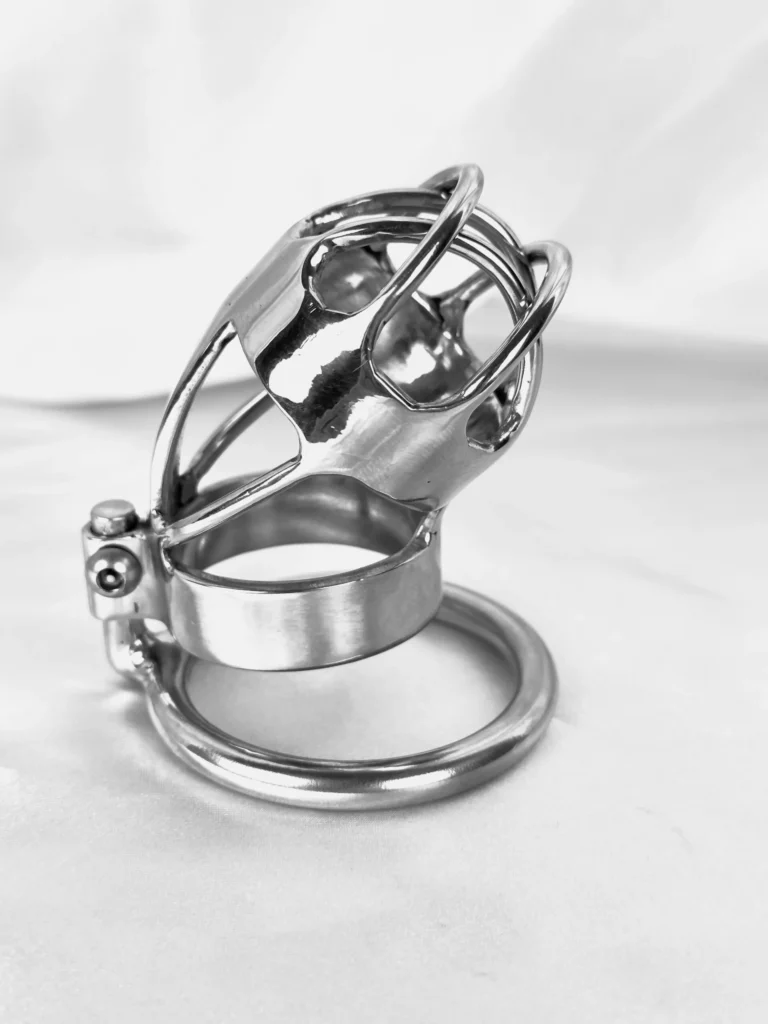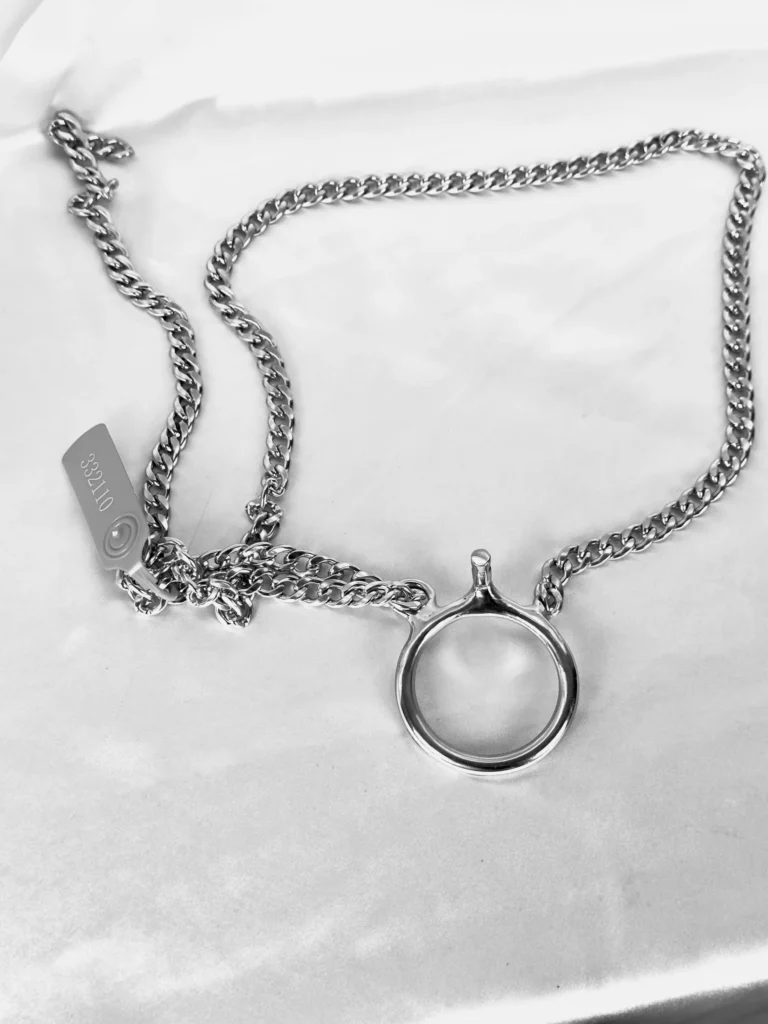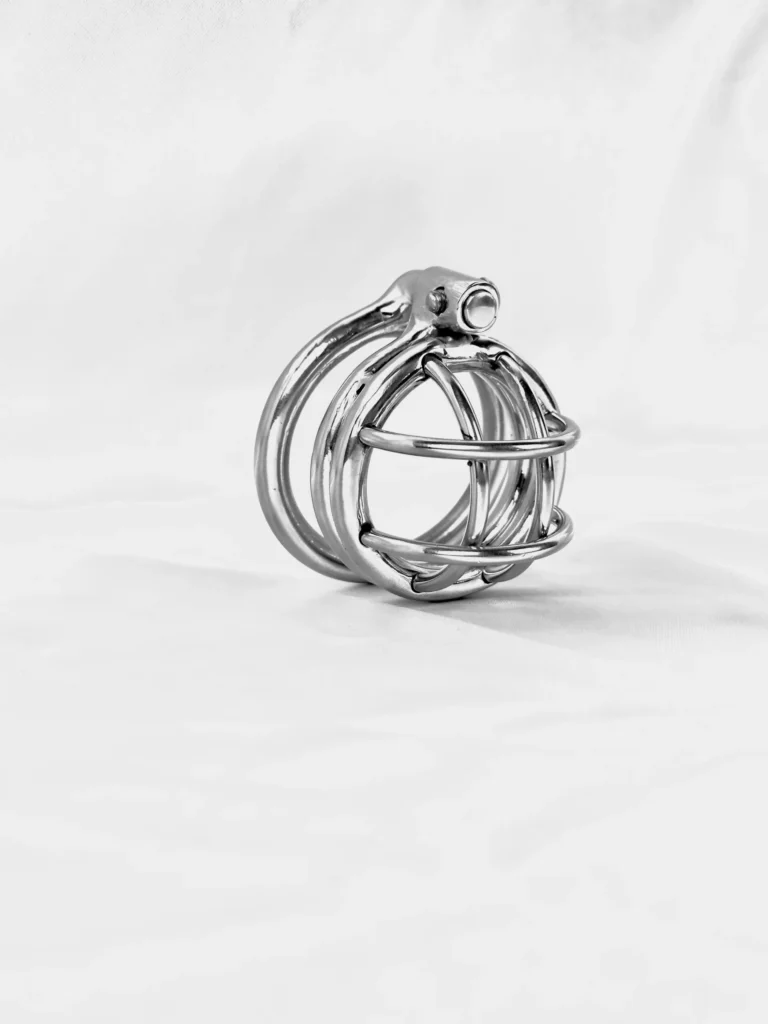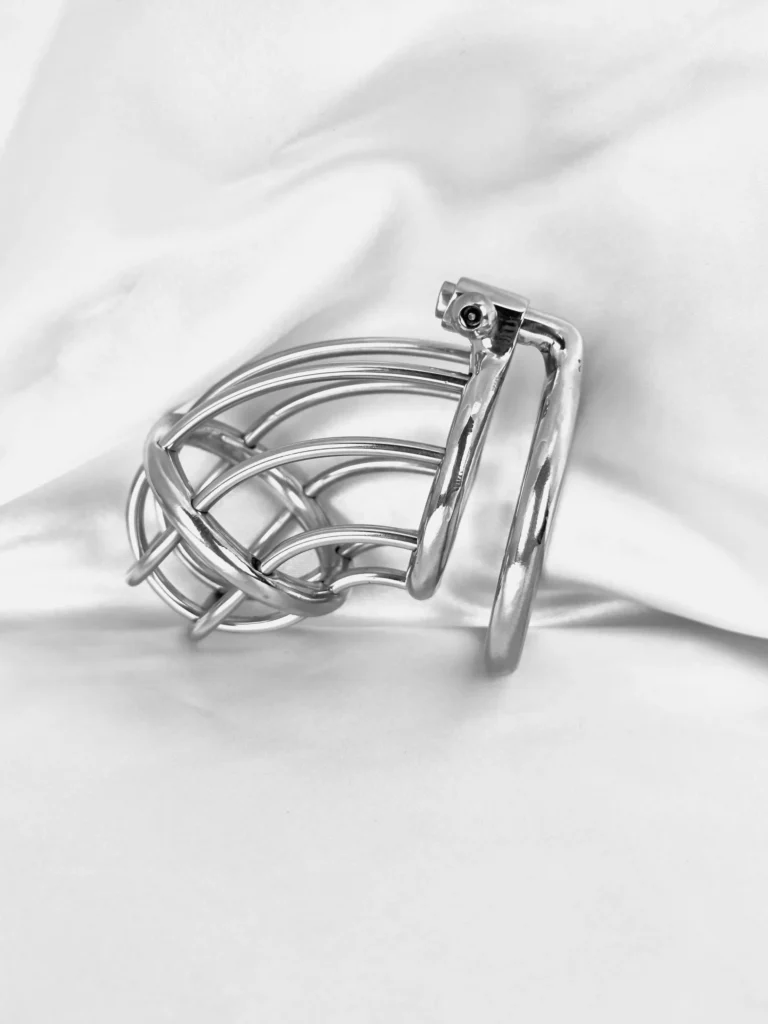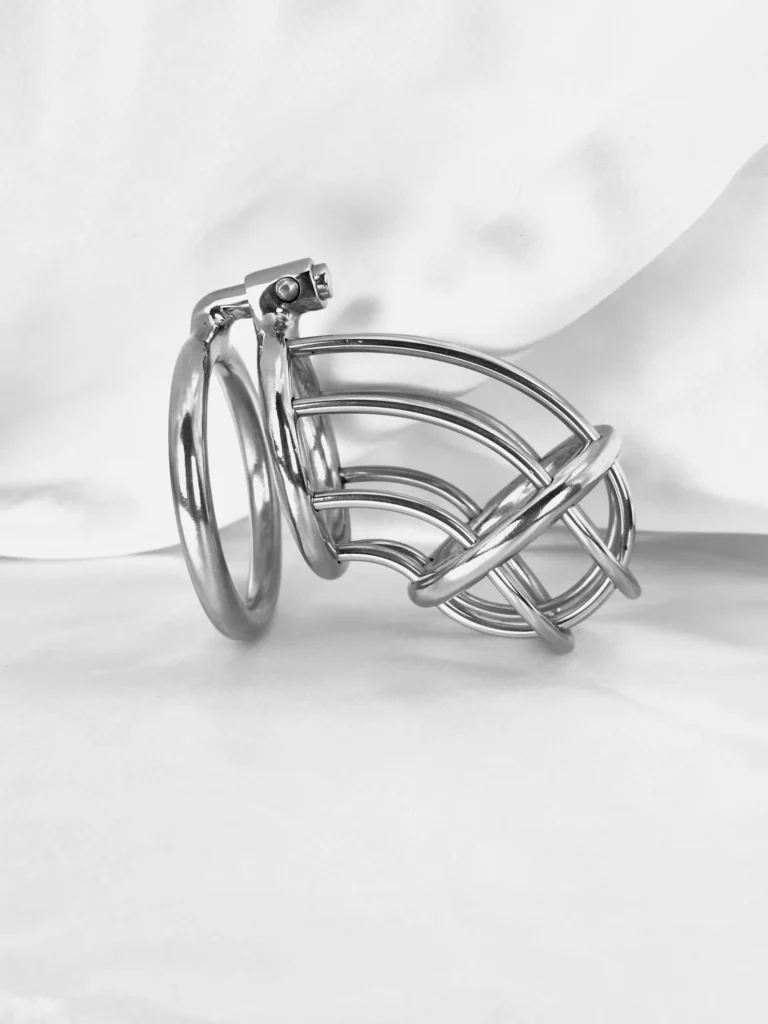
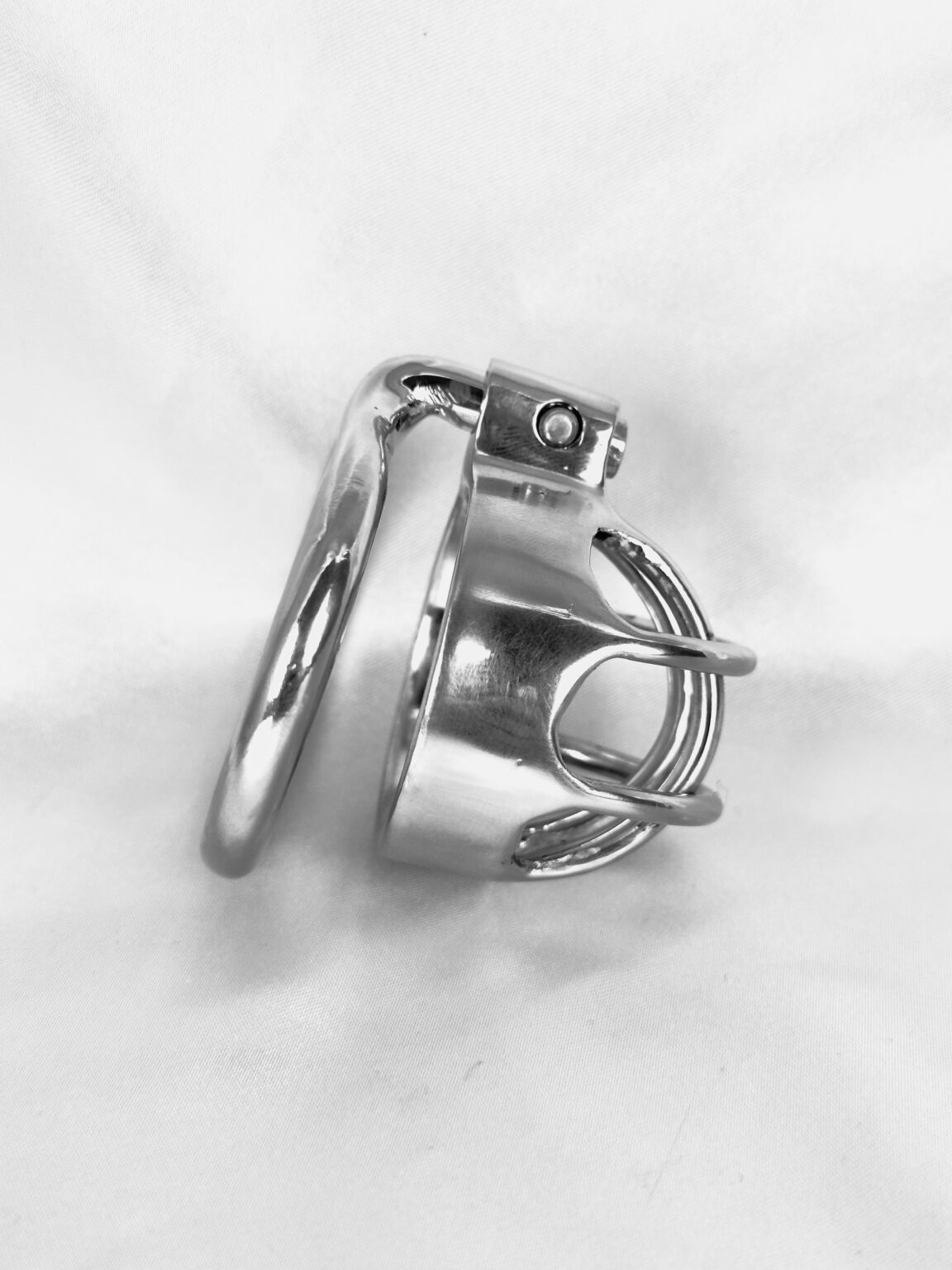
Chastity cages come in more shapes and designs than most first-time buyers expect. The main types of chastity cages are open bar cages, closed tubes, flat cages, inverted cages, full chastity belts, and ring-only setups. Each of those arrives in several materials and a wide spread of sizes, which is where most of the confusion starts.
The current search results for this question are retailer lists, so here’s the manufacturer’s version instead. We’ve built custom steel devices since 2009, and we’ll walk through every design honestly, including the ones we don’t make and the ones we’d steer certain bodies away from.
|
Type |
How it encloses |
Strong points |
Watch-outs |
|---|---|---|---|
|
Open bar cage |
Bars with open space between them |
Hygiene, airflow, clean-in-place, easy urination |
Skin is visible through the bars |
|
Closed tube |
Solid shell around the penis |
Full coverage, smooth exterior |
Traps heat and moisture; cleaning means removal or flushing |
|
Flat cage |
Compresses close to the body |
Maximum concealment |
Small internal space; sizing is unforgiving. Must sit to urinate. |
|
Inverted cage |
Directs the penis inward |
Extreme low profile |
Comfort can be an issue as well as hygiene. |
|
Full belt |
Waist-mounted frame |
No load on a scrotal ring |
Bulk, heat, bathroom logistics, frequent cleaning needed. Can be an issue with weight gain or loss. |
Every row above exists for a reason, and every row suits somebody. The rest of this guide takes them in turn.
Before shape, before material, decide how enclosed you want to be. This single choice changes daily life more than any other.
An open cage builds the enclosure from bars. Air moves, water reaches the skin, and you can wash and dry everything without taking the device off. That’s the design logic behind our own Jail Bird: its open bars let you clean in place, which is exactly what makes long-term wear practical instead of theoretical. Urination is simple, and skin problems announce themselves early because you can see the skin.
A closed tube trades all of that for coverage. Some wearers and Keyholders want the penis fully hidden, and a smooth shell delivers it. The cost is a warm, damp interior that needs real cleaning discipline. Most plastic devices are tubes; they are very hard to keep clean and can still smell after cleaning.
Our position is no secret: we build open designs. The point to having a cage is to not need constant removal for cleaning. If you can take out the hassle factor for your Keyholder they will be much more inclined to support your lockup.
Within either family, chastity cage designs split by the line the cage follows.
Straight or classic bar cages hold the penis in its natural downward-resting position. This is the shape people picture, and the Jail Bird is the cage other makers get compared to in this category. It’s the most forgiving shape to fit and the easiest to live in, which is why it’s where we point most first-timers.
Flat cages compress everything close to the body for concealment above all. Demand for them has grown fast. They work, but the internal space is small and the wearer must sit to urinate. We’ll publish a full guide to flat designs later in this series.
Inverted cages direct the penis inward rather than containing it outward. They deliver the most extreme low profile available. We’ll give them their own honest article soon; fitting and comfort can be challenging as well as keeping it clean.
Ask the market and chastity cage styles sound like a fashion question. Ask a maker and it’s mostly a length question. Our Jail Bird builds from 1 1/4″ up to 5″ long (roughly 3 to 13 cm) in 1/4″ steps. We can tell you the surprise runs one way: almost everyone’s first guess is too long. A shorter cage sits better, chafes less, and hides more.
That’s why the catalog carries Mini and Micro versions of our main designs, from the Mini Jailbird down to the Micro Watchful Mistress, alongside the standard builds and the rest of the range: the Watchful Mistress, Pet Trap, The Spyder, and Racket. Each product page shows its design; each is built to your measurements rather than pulled from a shelf.
Every shape above exists in several materials, and material changes the ownership experience more than shape does.
Steel is the long-haul answer. Ours is 304 and 316 surgical stainless: rigid, non-porous, sterilizable, and buildable to exact custom dimensions. Rigidity matters more than it sounds; a cage that can’t flex keeps the same interior space all day.
Silicone is soft and cheap, a sensible first experiment. It is very hard to clean as the smell will stay embedded into the cage.
Plastic is the historic starter category, light and affordable. Its known weakness is cracking with age at pins and seams. It is a struggle to keep clean.
Resin and 3D-printed devices are the modern off-the-shelf option, often with generous size ranges. These can be of great benefit when experimenting to get the best fit. Though the price for a custom plastic device can get very high.
We compare steel against silicone and against plastic properly in the next two articles in this series; the one-line summary is that soft materials are for trying and steel is for staying.
Before the catalog, ask these, in order.
What’s the cage for? A symbol? A security-first arrangement points at curved designs and a security screw. Concealment above everything points at flat and short builds. Name the job first and half the table above eliminates itself.
How long will it stay on per stretch? The longer the wear, the more hygiene weighs, and hygiene favors open bars every time. A tube removed nightly and a tube worn for a week are entirely different propositions. If 24/7 is the ambition, an open cage isn’t a preference; it’s the enabling design.
What does your body say? Anatomy gets a vote at every line of the table: resting angle for curved designs, scrotum and gap for anything low-profile, and length for absolutely everything, which the sizing rings and a ruler will settle far better than any product photo. If you’re a step earlier than all of this, start with what a chastity cage actually is and come back. And once a design is on the bench, putting it on properly is a one-minute skill worth learning from day one.
Answer those three honestly and the type usually picks itself. What’s left is fit, which the next section refuses to let you skip.
Here’s the division no retailer list mentions, because retailers sit on one side of it. Every device above comes either in fixed sizes with spacer kits, or built to your body.
An off-the-shelf cage asks your body to match one of three or four sizes. A made-to-measure cage is built to four sizes taken from you: cage inside diameter, base ring inside diameter, length, and gap. One of those four is permanent. The cage inside diameter can never be adjusted after the build, and that single fact is why we tell every customer the same thing: wear our plastic sizing rings for at least a week before ordering steel. The base ring diameter and the gap we can adjust for you afterward, which most makers can’t; the cage diameter, nobody can.
Whatever type you land on from this page, that’s the order of operations. Type second. Fit first. The full method is in our chastity cage sizing guide.
There are two types of lock options. One is the padlock. We use and recommend the Abus lock. The reason is that it is a very well-made lock that resists rust. The shank is the perfect thickness for our devices. The Abus padlock sits sideways against the body rather than dangling. The lock will not make any noise and it will hold the ring in place to prevent it from swinging from side to side allowing the testicles to escape.
The upgrade is a security screw, which goes in the same hole as the lock. The hole is just threaded for the security screws. The screws are a special design made just for our cages. You will not be able to find a tool at any hardware store.
If you order the security screw you will be able to put the Abus lock in the same hole so you will have the option of using the lock or the screw.
Ready to look at actual designs? Browse the full range; every device on that page is built to your four sizes, not pulled from a shelf. Not sure of your sizes yet? The sizing rings come first, and maturemetalsales@gmail.com answers everything else.