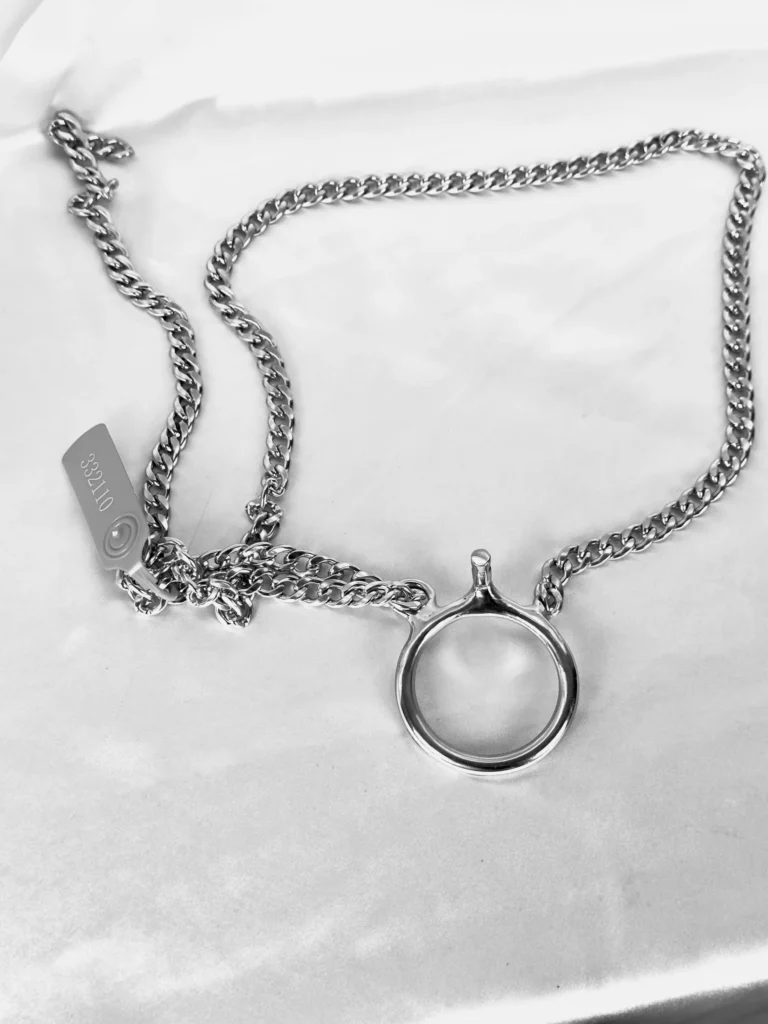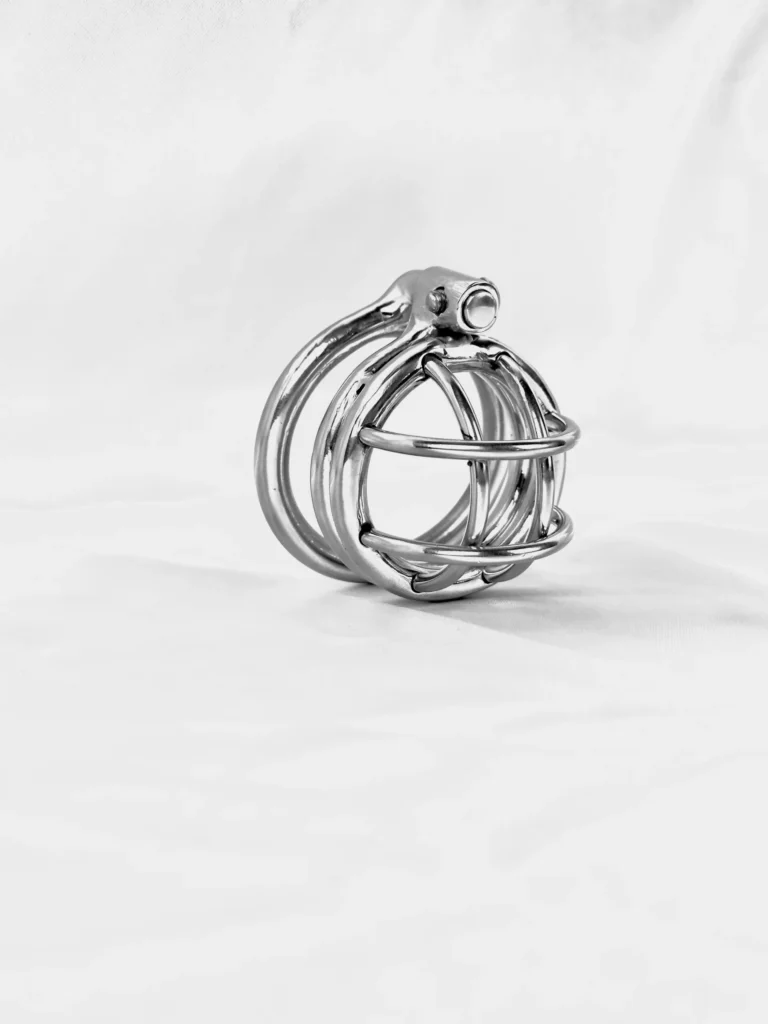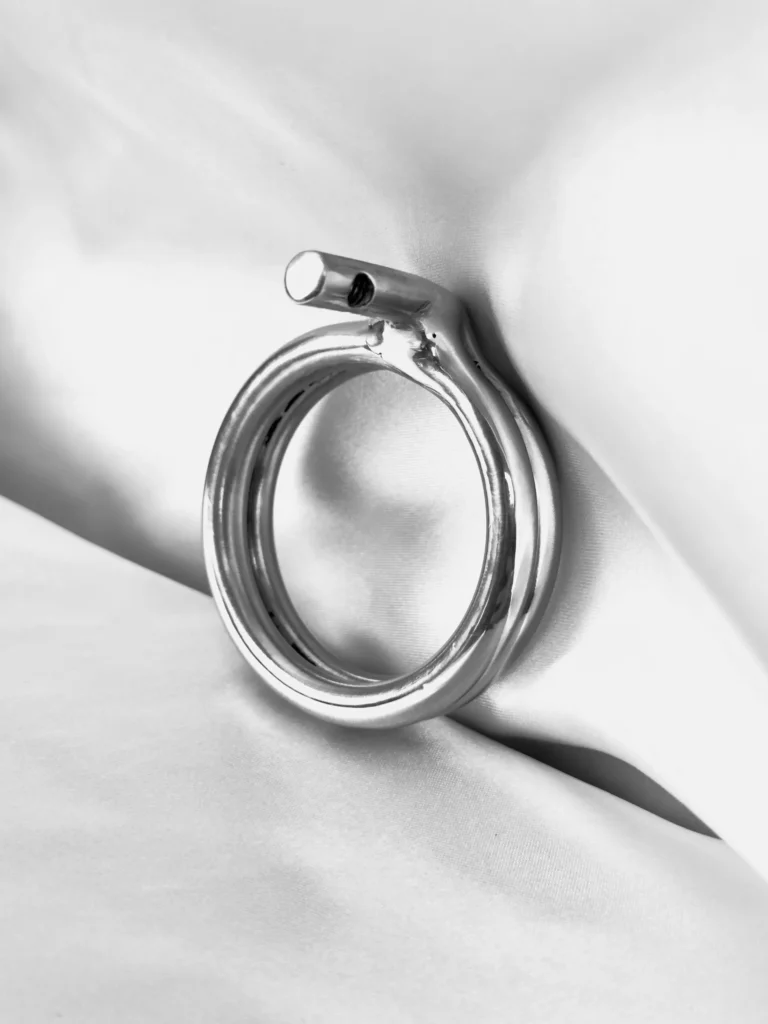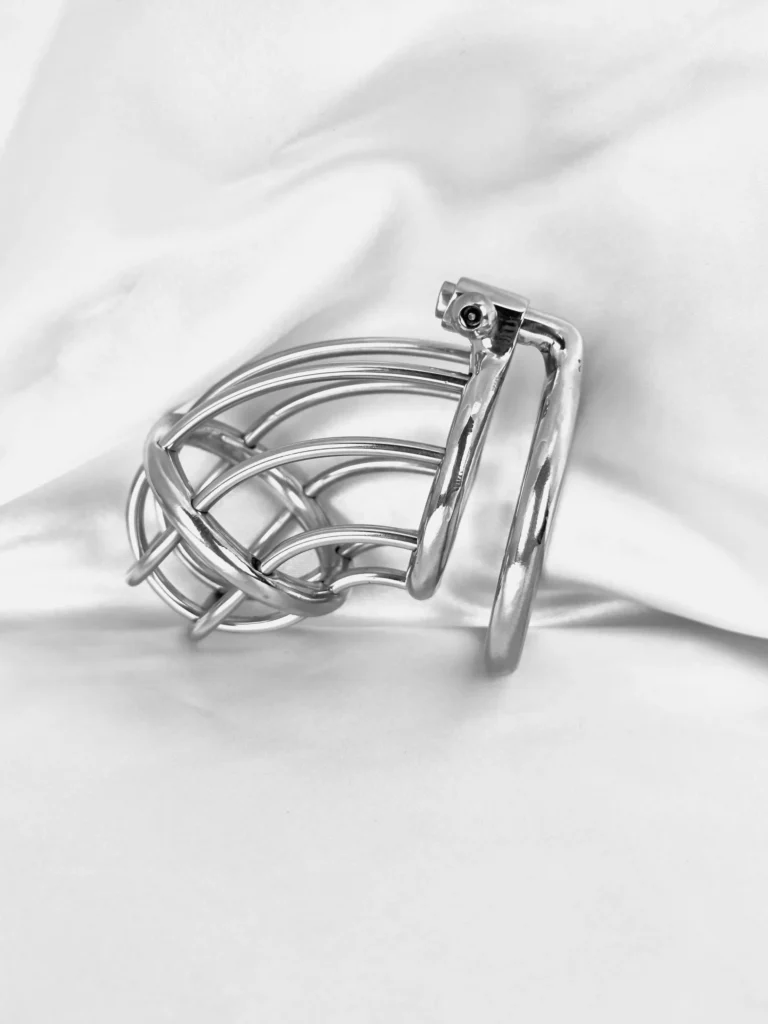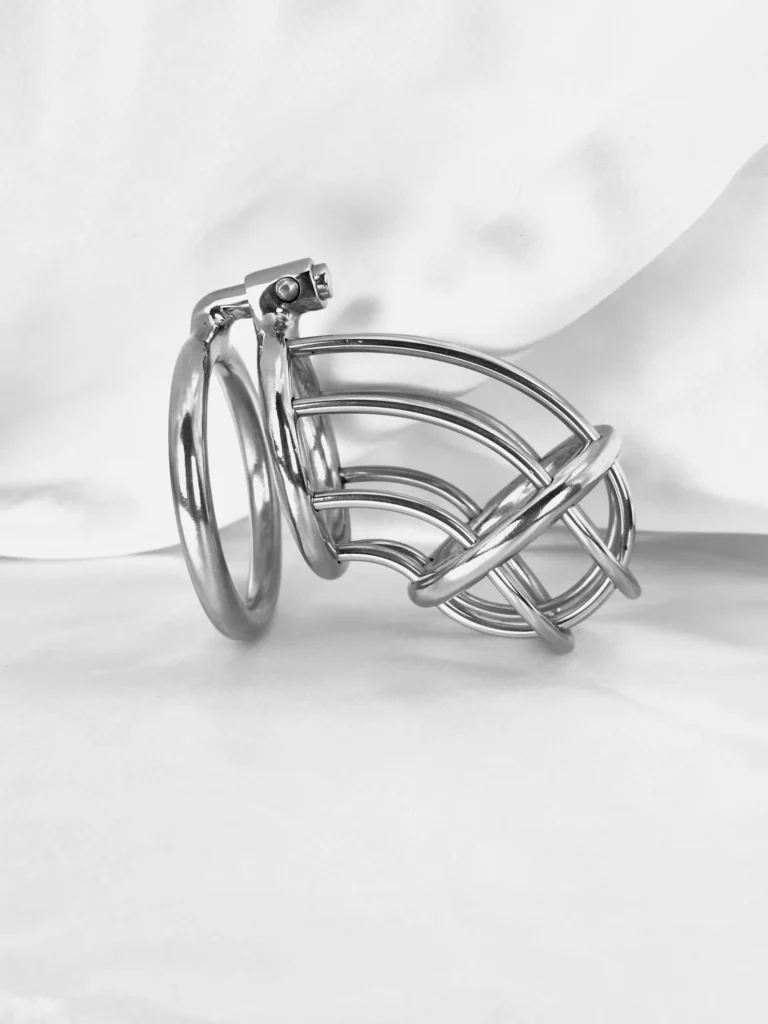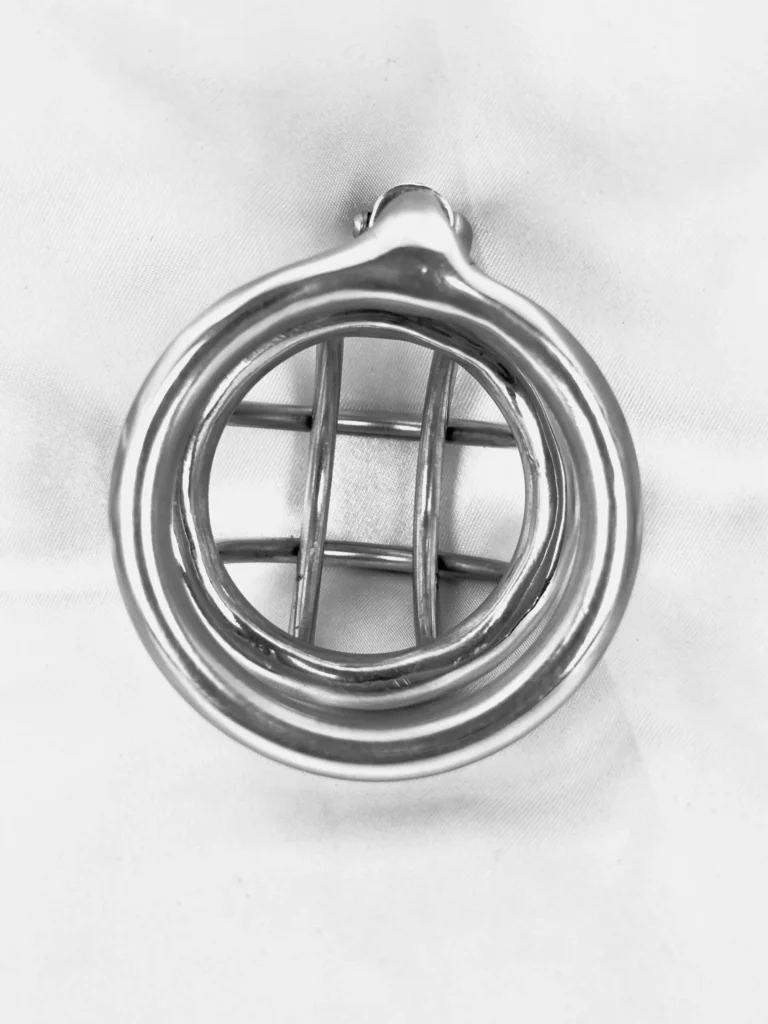
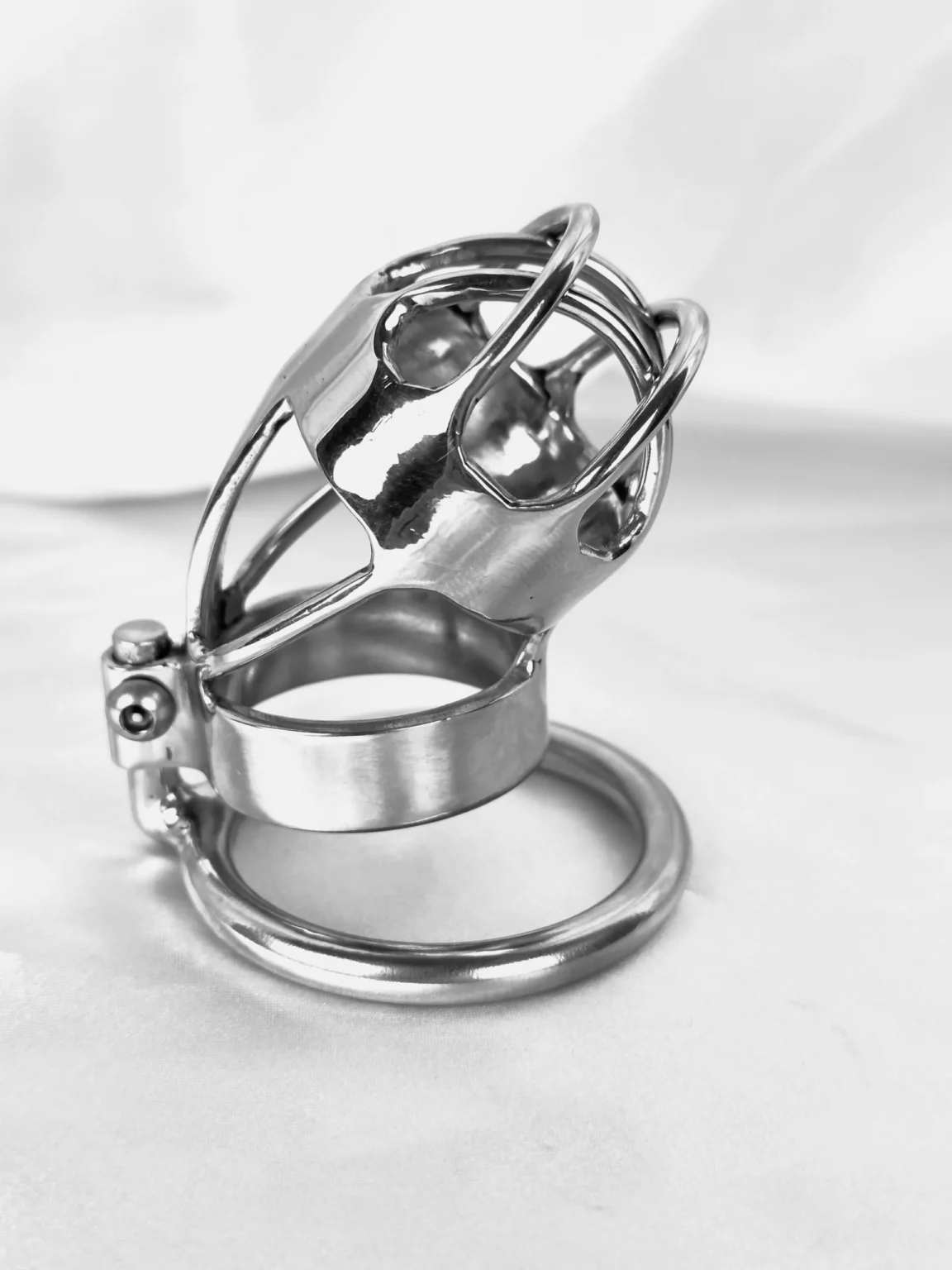
An open chastity cage is built from bars with space between them; a closed cage encloses the penis in a solid tube with a slot at the front. On the things that decide whether a device gets worn every day, hygiene, comfort, and how well it holds up over years, the open design wins clearly, and it’s why every device in our workshop is an open bar cage. Closed tubes have two real advantages: they hide the glans completely, and in plastic they’re more discreet at airports. Everything else favors open.
A bar cage, or open cage, holds the penis inside a framework of rings and bars, usually round steel bar stock. There are gaps everywhere: between the bars, between the rings. Air, water, and soap pass straight through. The skin is visible and reachable. The Jail Bird is the reference example: a classic bar design that’s low profile, concealable, and built for round-the-clock wear because it can be cleaned without removing it.
A closed cage, or tube, encloses the shaft in a solid wall of plastic, resin, silicone, or occasionally metal, with a slot or hole at the front for urination and sometimes small vent holes. The glans is hidden. Water reaches the inside only through the slot. The material choice matters here: the solid shape is what makes a plastic tube structurally sturdy, so closed and plastic tend to go together for a reason.
| Open bar cage (steel) | Closed tube | |
|---|---|---|
| Cleaning | Soap and water in the shower, without removal. Every surface reachable. Sterilizable when off. | Very hard to keep clean in place; water can’t reach the inside walls. Can still smell after cleaning. Bacteria will grow inside unless removed for a proper wash. Can’t dry. |
| Smell | None that soap and water don’t handle; polished stainless absorbs nothing. | A recurring problem; silicone tubes hold odor in the material itself. |
| Skin health | Air moves through; skin dries; skin slides across smooth steel during an attempted erection. | Damp enclosed skin; on plastic, skin can stick, fold into the cage or ring, and pinch under blood-flow pressure. |
| Urination | Through the bars, standing; a shake and a blot. | Through the front slot; spray and dribble are common complaints; often sitting is easier. |
| Comfort in daily life | Fitted correctly, holds itself up, forgettable. | Depends heavily on how the off-the-shelf size happens to match you. |
| Fit | Made to your four sizes; ring, gap, and length adjustable after delivery. | Off-the-shelf sizes; wrong size means a whole new device. |
| Security | Stainless steel with a security screw is very difficult to defeat. | Plastic can be broken or cut; enclosed shape doesn’t add security. |
| Glans coverage | The glans is visible through the bars. | Fully enclosed. The clearest advantage of a tube. |
| Concealment under clothes | Low profile at the right length and girth. | Bulkier for the same internal length; the wall adds volume. |
| Airports | Steel triggers metal detectors; plan for a pat-down or checked luggage. | Plastic tubes with metal-free locks may pass a metal detector; a real, if narrow, advantage. |
| Weight | More than plastic; forgettable when fitted. | Lighter. |
| Longevity | Built to last a lifetime; lifetime warranty on manufacturing defects. | Plastic fatigues, cracks, and yellows; a consumable over years. |
| Price | Higher, once. | Lower, per device; often more than once. |
Hygiene, and everything downstream of it. This is the decisive column. The whole point of having a cage is not to need constant removal for cleaning. A closed tube requires the key regularly to stay fresh; an open bar cage is cleaned in the shower and never comes off for it. That difference decides how a lockup actually runs. If you can take out the hassle factor for your Keyholder, they’ll be much more inclined to support it. Full routine in our cleaning guide.
Skin. Air through the bars keeps skin dry. Smooth stainless lets skin move rather than stick. Plastic tubes give us the pinching stories we hear from upgraders: skin sticks to the material, folds into the cage or ring during an attempted erection, and the pressure pinches it, worse in public or at work where you can’t adjust anything. Steel doesn’t do that. Our metal vs plastic comparison goes deeper.
Fit. Open bar cages from a workshop like ours are made to four sizes and three of them can be adjusted afterward, even years on. A closed tube from a shelf comes in a handful of sizes and the wrong one is replaced, not fixed. Our fitting problems guide shows why that matters over years of wear.
Security. People assume the solid wall of a tube adds security. It doesn’t; it adds material that can be cut or broken. Stainless steel with a security screw is very difficult to defeat, and the Abus lock or security screw holds the ring in place to prevent the side-to-side swing that could let the testicles escape.
Longevity. A steel bar cage is a purchase you make once. Cracked plastic and rusted welded-ring cages are the two origin stories we hear most from customers arriving at custom steel.
We said we’d be fair.
Full glans coverage. If the arrangement requires that the glans is hidden and untouchable, a tube does that and a bar cage doesn’t. That’s a real preference for some Keyholders and it’s the one thing a bar design can’t offer.
Airport discretion. A plastic tube with a plastic lock may walk through a metal detector. Steel won’t; our airport security guide covers what happens instead. If you fly weekly, weigh it.
Upfront price and wait. Off-the-shelf tubes cost less and ship immediately. Custom steel costs more and takes weeks to build. If you’re experimenting to find out whether chastity is for you at all, a low-cost tube is a rational first step; several customers tell us that’s exactly what their CB-series device was.
That’s the list. Notice what isn’t on it: hygiene, comfort, fit, or security. A tube used to be the “honest way” to full coverage; we no longer recommend tubes even conditionally, because the hygiene cost of enclosure is paid every single day, and coverage is one preference against everything else.
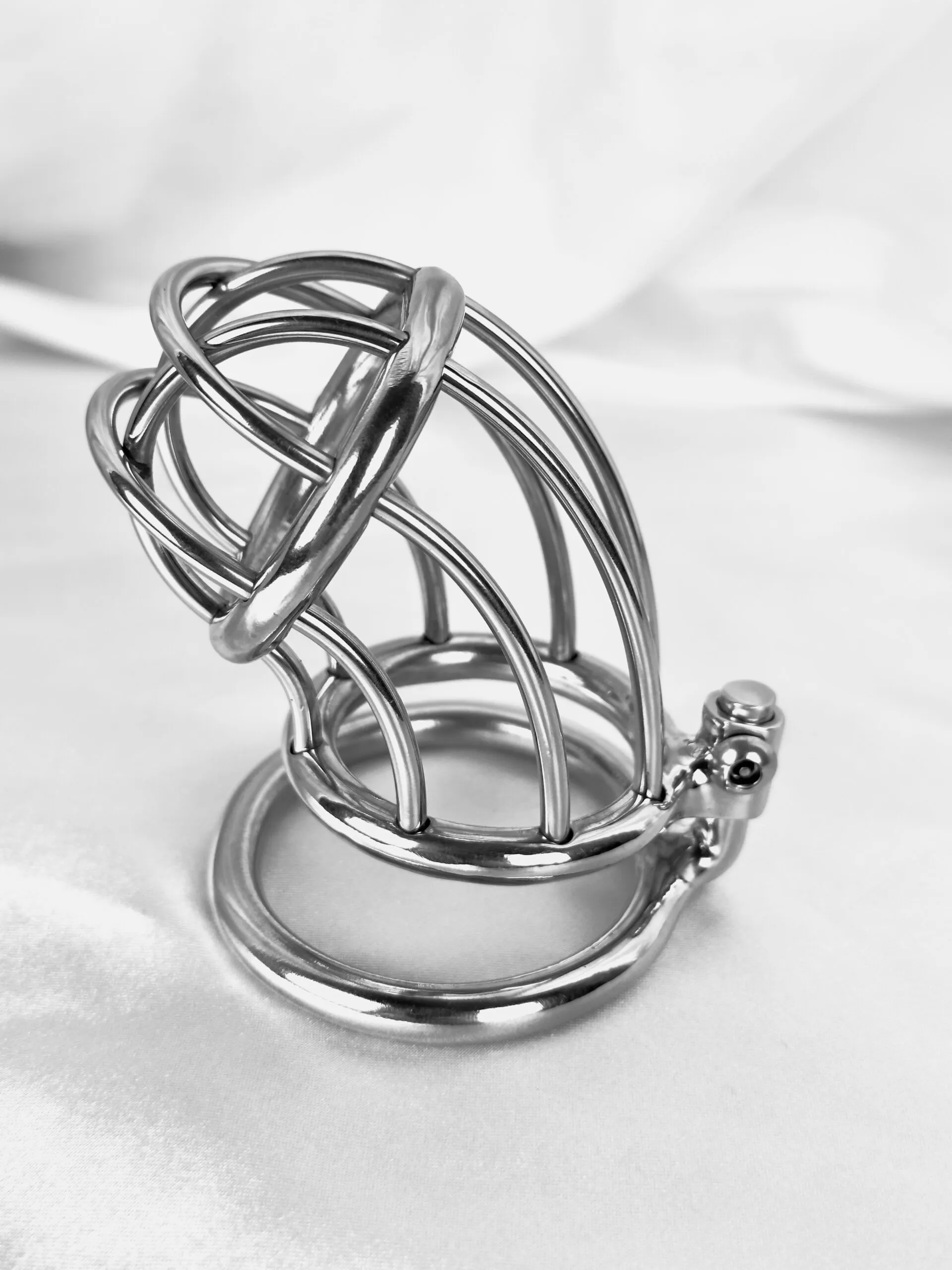
Some devices sit between the two: tubes with generous vent holes, or bar cages with a solid end cap or partial shroud. They inherit whichever column their enclosed parts fall in. A vented tube is still a tube where the vents aren’t; a bar cage with a solid tip is open everywhere except the tip. Judge each surface by whether water and air reach the skin behind it. The types guide walks through every design shape.
If daily wear, hygiene without removal, and a fit that can be adjusted over years are the priorities, an open bar cage in stainless steel is the answer, and it isn’t close. If total glans coverage is the non-negotiable, a tube is the design that provides it and you’ll manage the cleaning around it. If you’re not sure chastity is for you yet, a cheap tube to find out is a reasonable experiment; just don’t judge what fitted steel feels like by it.
Either way, fit is the variable that decides comfort within any design. The plastic sizing rings give you the two diameters that matter most, whatever you end up ordering.
Every device we make is an open bar cage, in standard, Mini and Micro builds. Browse the full range, or start where every good fit starts, with the plastic sizing rings worn for at least a week.